Leave Your Message
0%

Honestly, picking the right carport roof panels in 2026 isn't just about price and looks. Carports Roof Panels need to hold up against your local weather, handle structural demands, and still make sense when it comes to long-term maintenance. So yeah, buyers might want to look at galvanized steel, aluminum, polycarbonate, or insulated sandwich panels—each has its own trade-offs. Every option is going to act a little differently when it's up against blazing sun, pouring rain, wind, snow, and salty coastal air.

And honestly? Real-world performance is what counts. A panel that's great in a dry inland area might not hold up so well near the ocean. If you've been around the block, you'll want to look at coating thickness, corrosion resistance, how it drains, the quality of the fasteners, and whether replacement parts are easy to get. Clear installation instructions matter too, especially if the product is crossing borders. It's the small stuff that adds up.

Don't overlook the supporting frame, okay? Even a really solid panel can run into trouble if the spacing, slope, or connections aren't designed right. Before you order, it's worth comparing the technical specs, warranty details, test reports—and honestly, how well the supplier communicates with you. And depending on your project and where you're building, local codes and advice from a professional engineer might come into play too.

So, here's the thing: some recommendations are still up in the air. Product claims? They're not always tested under the exact same conditions. And yeah, that's worth keeping in mind. A cheaper panel might look like a great deal right now, but it could need maintenance or replacement sooner than you'd expect. In this guide, we look at practical options for different climates, budgets, and carport designs. The goal is to help buyers around the world make smarter choices—while also being honest that no single roof panel works for every market.
2026 Best Carport Roof Panels for Global Buyers

Carport Roof Panel Types and Their Core Differences

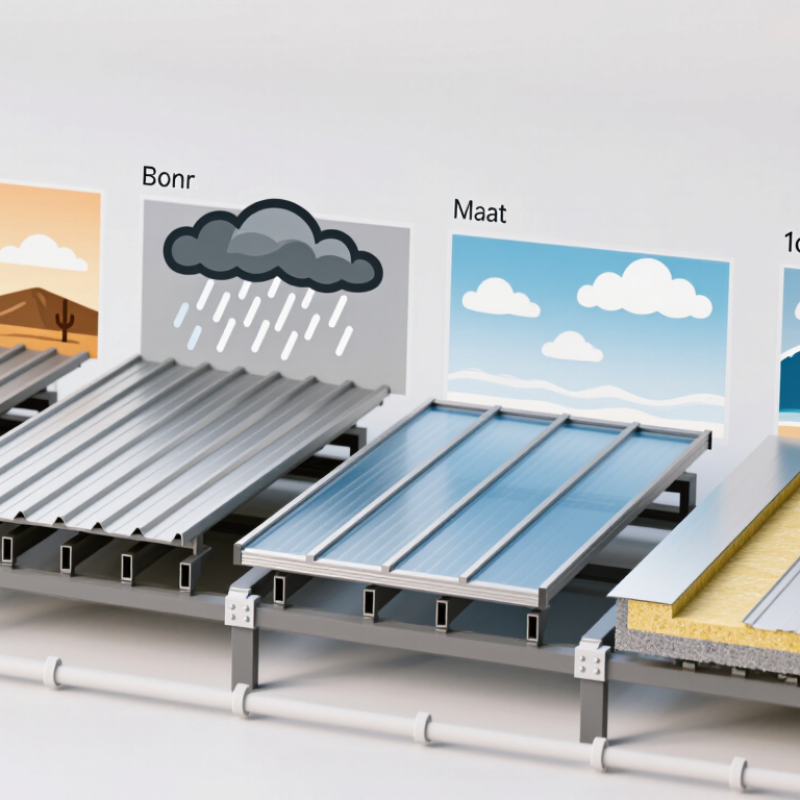
Choosing the right Carports Roofing Sheet starts with climate, structure, and daily use. Corrugated steel panels offer strong impact resistance and affordable installation. Their ribs improve stiffness, but damaged coatings can expose steel to rust. Rain also sounds louder beneath them.

Standing-seam metal panels hide their fasteners and reduce leak risks around screw holes. They suit snowy or windy regions when the supporting frame meets local load requirements. Installation demands accurate alignment, proper clips, and more skilled labor. Aluminum panels weigh less and resist corrosion, but they dent more easily. They also expand noticeably under strong sunlight.

Polycarbonate panels bring daylight into the carport, reducing daytime lighting needs. Solid sheets resist impacts, while multiwall sheets provide better insulation. However, poor UV protection may cause yellowing or brittleness over time. Check thermal expansion gaps carefully. Small mistakes matter.

From practical installation experience, drainage often matters more than appearance. A slight roof slope helps water leave quickly and protects wall edges. I once preferred dark metal for its clean look, but summer heat made the space uncomfortable. That choice needed more thought. Buyers should compare panel thickness, coating performance, fastener quality, snow and wind ratings, fire classification, and local building requirements. Product data sheets are useful, but the site conditions still decide whether a panel performs well.

How to Match Roof Panels With Climate and Weather Conditions

Choosing carport roof panels begins with the local climate, not appearance. Plastic roof panels suit many warm regions because they are lightweight and resist moisture. However, strong sunlight can cause expansion, fading, or brittleness over time. UV-protected sheets usually perform better in exposed driveways. Leave suitable movement gaps during installation.

Cold regions need panels and framing that can manage snow weight. A steep roof helps snow slide away, but only when local safety rules permit it. In coastal areas, salt air can corrode metal fasteners. Use corrosion-resistant fixings and inspect them after severe storms. For windy locations, closer purlin spacing and secure edge fastening reduce lifting risks. Hail remains difficult. Even durable panels may show surface marks after impact.

Tips: Check annual rainfall, sunlight, wind speed, snow depth, and temperature changes before buying. Compare the panel’s tested load ratings with your carport design. Keep ventilation under the roof to reduce trapped heat and condensation. Never assume a thicker sheet solves every problem. Thickness, support spacing, slope, and fixing quality work together. A small sample test can reveal glare and heat issues before full installation. I have seen attractive roofs become uncomfortable because reflected sunlight reached nearby windows. That detail is easy to miss. Also, installation guidance can vary by region, so consult a qualified local professional when structural loads are uncertain.

Key Materials, Coatings, and Performance Features to Compare

2026 Best Carport Roof Panels for Global Buyers

Key Materials, Coatings, and Performance Features to Compare

Choosing carport roof panels requires more than checking thickness or price. Galvanized steel offers strong impact resistance and suits windy regions. Aluminum weighs less and resists corrosion near coastal air. Polycarbonate panels admit daylight, but expansion can create movement around fasteners. That detail is often overlooked.

Coatings deserve close inspection. Zinc protection helps steel resist scratches and moisture. A high-quality paint layer can reduce fading under intense ultraviolet exposure. Fluoropolymer coatings usually perform well, but their value depends on proper application and edge protection. Look for clear coating specifications, measured thickness, and documented testing. Vague promises are not enough.

Performance depends on the complete roof system. Compare snow-load capacity, wind uplift ratings, hail resistance, fire classification, and temperature range. Check whether panels include suitable screws, washers, and flashing details. Poor installation can defeat excellent materials. In practical site checks, I have seen thick panels fail because water entered through loose fasteners. Panel gauge alone can mislead. A lighter panel may work well with closer supports, while a heavy panel may overload a weak frame. Local building rules also vary, so confirm calculations with a qualified professional. There is no universal best panel. Climate, structure, maintenance access, and expected service life must guide the decision.

Sizing, Load Capacity, and Compatibility With Carport Frames

Choosing roof panels for a carport starts with dimensions, not appearance. Measure frame length, width, purlin spacing, roof pitch, and panel overlap. A 3-meter panel may still fail when the frame requires extra support. Small errors become expensive.

Load capacity must match the installation site. ASCE 7-22 calculates wind, snow, and rain loads using local climate, exposure, roof shape, and building importance. The International Building Code also directs designers toward site-specific structural values. Global buyers should request certified load tables, not rely on a single “maximum load” number.

In snowy regions, panels may need closer purlin spacing and stronger fasteners. In coastal zones, corrosion-resistant fixings matter. Wind uplift is often underestimated.

Compatibility includes more than panel width. Confirm screw locations, thermal movement allowance, edge support, drainage direction, and frame material. Steel panels can expand noticeably under direct sun. Rigid installation may cause buckling or leaking. A neat spreadsheet can still mislead. Field conditions are rarely perfect.

For quieter spaces, Sound Insulation Roof Panels may improve comfort, but acoustic claims require test evidence. ASTM E90 and ISO 10140 procedures measure airborne sound performance under controlled conditions. These results do not automatically represent an open-sided carport. Check the declared acoustic rating, panel core, joint design, and installation method. The International Energy Agency’s building-performance reports also show that envelope design affects comfort and energy use, although a carport has limited enclosure. Choose verified data over attractive numbers.

Global Standards, Safety Requirements, and Installation Considerations

2026 Best Carport Roof Panels for Global Buyers

Global Standards, Safety Requirements, and Installation Considerations

Selecting carport roof panels requires more than comparing thickness and price. Requirements vary by country, climate zone, and municipal building authority. Check local rules for wind uplift, snow loads, fire performance, drainage, and corrosion resistance before ordering materials. Product documents should show test methods, load values, UV resistance, and installation limits. Generic claims are not enough.

Corrugated Pvc Composite Carport Roof Panels can offer a practical balance between light weight and weather protection. Their layered structure may reduce denting and improve stiffness, but performance depends on the actual formulation. Ask for technical data, not only marketing descriptions.

In coastal areas, use corrosion-resistant fasteners and sealed washers. In snowy regions, reduce support spacing when engineering guidance requires it.

Measure the frame carefully. Panels should overlap against prevailing rain, while gutters must carry water away from posts and foundations.

Leave movement allowance around fasteners, because temperature changes can distort long sheets. Installers often discover problems at the edges, not the center. Small mistakes matter.

Use fall protection and stable access equipment during installation. Never walk directly on unsupported panels.

A curious weakness remains: international documents may use different units, test standards, and safety terms. Confirm conversions with a qualified local professional.

No roof is maintenance-free. Inspect loose fasteners, blocked gutters, cracks, and fading after severe weather.

Maintenance, Lifespan, Cost, and Sustainable Buying Decisions

2026 Best Carport Roof Panels for Global Buyers

Choosing carport roof panels requires more than comparing purchase prices. Maintenance access, local weather, and replacement difficulty shape real ownership costs. Galvanized steel usually tolerates hail and heat well, but scratches need prompt treatment. Polycarbonate panels admit daylight, although dust and ultraviolet exposure can reduce clarity. Small leaks become expensive.

The U.S. Department of Energy reports that cool roofs can reduce peak cooling demand by 10–20% in suitable climates. A light-reflective panel may therefore reduce heat below the carport. That benefit depends on airflow, roof angle, and regional sunlight. The result is not guaranteed. NREL’s photovoltaic degradation review found an average annual performance loss near 0.5% for many solar modules. Buyers adding solar roofing should budget gradual output decline, inverter replacement, and cleaning access.

Price comparisons should include fasteners, drainage parts, labor, inspections, and future disposal. RICS’s 2023 Whole Life Carbon Assessment framework separates upfront, operational, and end-of-life impacts. This encourages clearer buying decisions than a cheap initial quote. Recyclable metal can support circular procurement, but coatings and mixed materials may complicate recovery. A practical inspection should check loose screws, blocked gutters, edge corrosion, and ponding water twice yearly. I would not promise a universal lifespan; coastal salt, snow load, installation quality, and neglected maintenance can change it sharply. A spreadsheet can mislead. Choose documented load ratings, replaceable components, and repair access before chasing the lowest price.

2026 Best Carport Roof Panels for Global Buyers - Maintenance, Lifespan, Cost, and Sustainable Buying Decisions
Panel Type Typical Service Life Indicative Panel Cost
(USD/m², 2026)
Routine Maintenance Weather and Climate Performance Weight Range Recyclability and Sustainability Best Use Case Overall Value
Pre-painted galvanized steel 20–35 years when correctly coated, installed, and maintained $12–$30 Wash salt and dirt annually; inspect fasteners, cut edges, and scratches every 1–2 years; repair exposed steel promptly Strong wind and hail performance when adequately profiled and fixed; corrosion risk is higher in coastal or polluted environments 4–7 kg/m² Highly recyclable through established steel recycling systems; recycled content varies by supplier and region Most climates and buyers seeking a practical balance of price, strength, and availability ★★★★☆
Aluminum sheet or standing-seam panel 30–50 years; longer in low-pollution environments with suitable coating $25–$60 Rinse periodically in coastal areas; inspect joints and fasteners; avoid incompatible metals that may cause galvanic corrosion Excellent resistance to atmospheric and salt-air corrosion; softer than steel and more vulnerable to denting from severe hail 2–4 kg/m² Infinitely recyclable without losing basic material properties; recycled aluminum generally requires much less energy than primary aluminum Coastal regions, lightweight structures, and projects prioritizing long life with low corrosion risk ★★★★☆
Aluminum-zinc coated steel 25–40 years, depending on coating quality, cut-edge protection, and exposure $15–$35 Remove debris from overlaps and gutters; inspect coating damage and fasteners every 1–2 years; do not use harsh cleaners Better atmospheric corrosion resistance than basic galvanized steel; performance still depends on installation and local humidity 4–7 kg/m² Steel core is widely recyclable; the protective metallic coating remains part of the recyclable steel stream Buyers wanting a durable metal roof at a moderate cost ★★★★★
Solid polycarbonate sheet 15–25 years for UV-protected products; lower-quality sheets may age sooner $20–$55 Clean with mild soap and water 1–2 times per year; check UV-facing surface, washers, expansion gaps, and scratches Very good light transmission and impact resistance; thermal expansion, wind uplift, and UV degradation must be addressed in the design 2–3 kg/m² Recycling options exist but are less available than for steel or aluminum; choose sheets with documented recycled content and take-back routes Carports needing daylight, lower structural loads, or a more open architectural appearance ★★★★☆
Multiwall polycarbonate sheet 10–20 years for good UV-protected products; lifespan depends strongly on sealing and installation $12–$35 Clean channels and surfaces gently; keep drainage paths open; replace damaged edge tape or profiles when required Good insulation and daylight performance; channels can collect condensation or dirt if edges are not sealed correctly 1.5–3 kg/m² Lower material use than solid sheets, but end-of-life recycling infrastructure is uneven worldwide Budget-conscious projects where insulation and natural light are more important than maximum impact strength ★★★☆☆
Corrugated PVC or UPVC 10–20 years, subject to UV exposure, temperature cycling, and product quality $8–$22 Wash gently; inspect for brittleness, cracking, discoloration, and loose fasteners at least annually Lightweight and corrosion-free, but can become brittle under prolonged UV exposure or extreme temperature changes 2–4 kg/m² Recycling availability varies considerably; virgin PVC production and disposal impacts should be considered before purchase Temporary, low-cost, or low-load carports in moderate climates ★★★☆☆
Fiber-cement corrugated sheet 25–40 years when properly supported and protected from impact $15–$35 Inspect for cracks, edge damage, biological growth, and blocked drainage; avoid walking directly on unsupported sheets Good fire and weather resistance; heavy and relatively brittle, requiring stronger framing and careful handling 12–18 kg/m² Long service life can reduce replacement frequency; recycling is limited in many markets, and older products may require hazardous-material checks Projects where fire resistance, acoustic comfort, and durability outweigh structural weight ★★★☆☆
Buying notes: Costs are indicative 2026 international panel-only ranges in USD per square metre and exclude framing, flashing, insulation, labor, shipping, taxes, and local permits. Actual lifespan depends on climate, UV exposure, wind and hail loads, drainage, coating thickness, installation quality, and maintenance. For sustainable purchasing, compare verified recycled content, expected service life, repairability, local availability, transport distance, and end-of-life recycling options rather than price alone.

FAQS

How should climate affect carport roof panel selection?

Check rainfall, sunlight, wind, snow, and temperature changes before buying. Warm regions need moisture resistance and UV protection. Climate matters more than appearance.

Are lightweight plastic panels suitable for sunny areas?

They can work well in warm, wet regions. Strong sunlight may cause expansion, fading, or brittleness. Choose UV-protected panels and allow movement gaps.

What measurements should be taken before ordering panels?

Measure frame length, width, roof pitch, purlin spacing, and panel overlap. Check screw positions and drainage direction. Small errors become expensive.

How can buyers confirm load capacity?

Match tested wind, snow, and rain ratings with local conditions. Ask for certified load tables. Do not trust one impressive maximum number.

What changes are needed in snowy or windy regions?

Snowy areas may need steeper slopes, closer supports, and stronger fasteners. Windy locations need secure edges and reduced purlin spacing. Wind uplift is easy to underestimate.

How should panels be installed near the coast?

Salt air can corrode ordinary metal fasteners quickly. Use corrosion-resistant fixings and sealed washers. Inspect them after severe storms.

Why are ventilation and thermal movement important?

Ventilation reduces trapped heat and condensation beneath the roof. Long panels expand in direct sun. Rigid fixing can cause buckling or leaks.

Can roof panels reduce noise and improve comfort?

Some panels may reduce airborne sound, but test results need careful checking. Open-sided carports perform differently from enclosed rooms. I might overestimate comfort without field testing.

What safety and maintenance steps are necessary?

Use stable access equipment and fall protection during installation. Never walk on unsupported panels. Inspect cracks, fading, loose fasteners, and blocked gutters after severe weather.

Conclusion

Choosing the right Carports Roof Panels is essential for creating a safe, durable, and weather-resistant shelter for vehicles in different regions. This guide compares common panel types, including metal, polycarbonate, and other practical options, while explaining how their strengths differ in light transmission, insulation, impact resistance, weight, and appearance. It also shows how to match panels with local climate conditions such as intense sunlight, heavy rain, snow, wind, humidity, or coastal exposure.

Readers will learn how to evaluate core materials, protective coatings, corrosion resistance, panel sizing, load capacity, and compatibility with existing carport frames. The article also highlights the importance of following applicable safety standards, selecting suitable fasteners and installation methods, and allowing for drainage and thermal movement. Finally, it explains how maintenance needs, expected service life, initial cost, energy efficiency, recyclability, and long-term value can support more sustainable purchasing decisions for global buyers.

Olivia

Olivia

Olivia is a dedicated marketing professional with a profound expertise in the roofing industry, particularly in high-performance resin roofing and cladding systems. With a background rooted in the advanced technologies of ASA/PVC/UPVC composites, she plays a crucial role in enhancing brand......
Previous What Are the Top 10 Hollow Roof Tile Types?