Leave Your Message
0%

Picking the right ASA PVC roof sheet isn’t just about looks—it actually plays a big role in how comfortable your building is, how long it lasts, and what your maintenance costs will look like. The thing is, folks all over the world face pretty different conditions—climates, roof angles, how far it needs to be shipped, and local installation standards. A sheet that works great in Spain might not hold up as well somewhere with tropical heat or heavy snowfall. And honestly, that difference really does matter.

In this guide, I’m breaking down seven solid options from trusted manufacturers like Palram, Tuftex, and Onduline. We’ll look at how well they resist weather, impact, how much light they let through, their thermal performance, compatibility with different roof profiles, warranty details, and overall cost—including shipping. If your priority is daylight, ventilation, or cutting down on structural weight, then an ASA PVC hollow roof sheet is worth considering too. Plus, tiny things like sheet thickness, how the overlaps are designed, fitting methods, and protective coatings—those little details can really change everything.

Industry expert Michael Turner, who specializes in polymer roofing systems, always says, “You gotta judge a roof sheet by how it performs in the full service environment—not just how it looks sitting on a shelf.” It’s a good point—though, of course, it’s not a perfect rule. No product data can predict every mistake during installation, freak weather events, or delays in supply. So, before you order, make sure to ask for technical sheets, sample panels, warranty info, and clear installation guides.

What you’re getting here isn’t just a list ranking products blindly. It’s about comparing what each one has to offer—each comes with its own set of perks and trade-offs. Some are all about transparency, others focus more on insulation or impact resistance. Ultimately, the best ASA PVC roof sheet for you will depend on your roof type, local climate, budget, and the experience of your installer. Taking the time to double-check all these aspects can help you steer clear of costly surprises down the line.
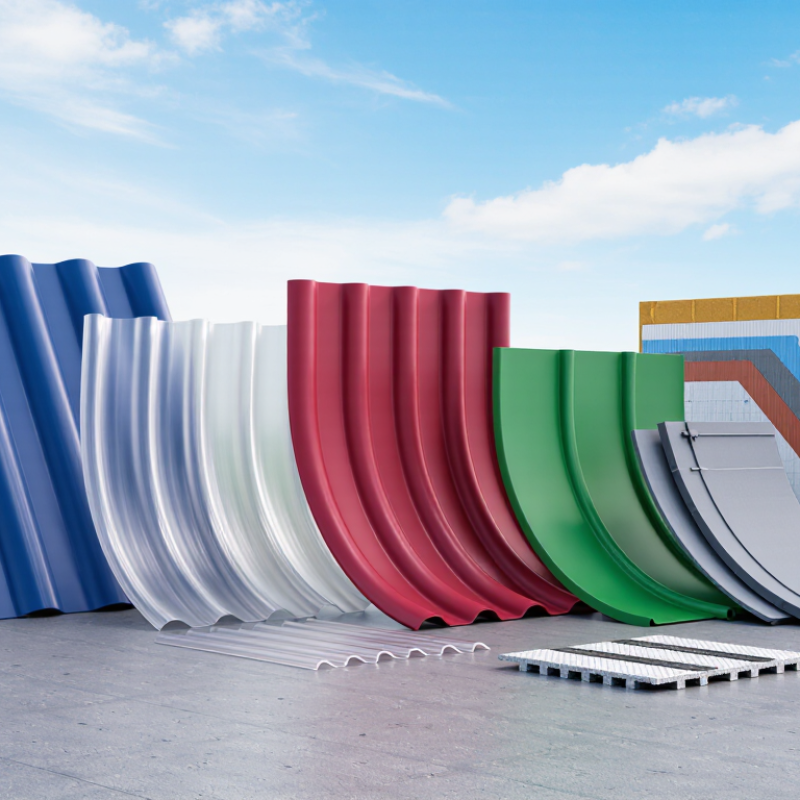
7 Best ASA PVC Roof Sheets for Global Buyers

What Are ASA PVC Roof Sheets and Why Do They Matter?

ASA PVC roof sheets combine a rigid PVC core with an ASA weather-resistant surface. The ASA layer helps protect the sheet from ultraviolet radiation, heat, rain, and color fading. This structure matters in regions with strong sunlight or changing seasons. A good sheet should remain lightweight, corrosion-resistant, and reasonably impact-resistant. It can suit workshops, agricultural buildings, warehouses, and residential extensions. The surface also reduces maintenance compared with many traditional metal roofing options. Still, the material is not magic. Poor installation can cause leaks, distortion, or premature damage.

Global buyers should examine more than thickness and color. Check the ASA layer, profile dimensions, fire performance, load data, and applicable testing documents. Reliable suppliers should explain production controls and provide clear technical specifications. Ask how the sheets perform under local temperature changes. Thermal expansion needs proper spacing and fastening. Experienced installers also inspect purlin alignment before fixing each panel. Small errors become visible when sunlight hits the roof. I have seen projects focus on the lowest price, then spend more on repairs. That choice deserves reflection. Product quality, transport protection, installation skill, and local climate must be considered together. A suitable ASA PVC roof sheet is not simply attractive; it should match the building’s actual working conditions.

Key Features to Compare in ASA PVC Roofing Products

When comparing the seven best ASA PVC roof sheets, buyers should examine performance beyond color and price. ASA surface resin should resist ultraviolet exposure, fading, and temperature cycling. Ask for test results under ISO 4892-3 or ASTM G154 procedures. These standards help assess accelerated weathering, but they cannot perfectly reproduce every climate.

Check sheet thickness, rib geometry, impact resistance, and thermal movement. A thicker panel may feel stronger, yet poor installation can still cause cracking or leakage. Confirm the operating temperature range, fire classification, and fastener compatibility. The 2023 Global Status Report for Buildings and Construction states that buildings used about 34% of global energy in 2022. Therefore, solar reflectance and insulation should matter, especially in hot regions. Measure them through documented laboratory data, not broad sales claims.

Tips: Request color-change data, impact results, and warranty conditions. Inspect a cut edge for uniform layers and secure reinforcement. Compare acoustic performance too; rain on hollow sheets can be surprisingly loud. No sheet is perfect. One practical weakness is often overlooked: performance data may come from short laboratory cycles. Visit completed roofs when possible, and ask installers about cracking, screw pull-out, and fading after several rainy seasons. That evidence is sometimes more useful than a polished brochure.

7 Best ASA PVC Roof Sheet Profiles for Global Buyers

Comparison based on commonly used roofing criteria: UV-weathering resistance, impact resistance, corrosion resistance, thermal insulation, and installation simplicity. Scores use a practical 1–5 comparative scale and are intended for product shortlisting rather than laboratory certification.

Seven Leading ASA PVC Roof Sheet Options for Global Buyers

Global buyers often compare seven leading Asa Pvc Roof Sheet options by profile, climate, and installation needs. Corrugated sheets suit farm buildings and simple warehouses. Trapezoidal sheets offer wider coverage and stronger load distribution. Tile-profile sheets provide a residential appearance without traditional tile weight. Flat-panel versions work well for clean architectural lines.

Insulated sandwich panels help control indoor temperature in workshops and storage areas. Translucent ASA PVC sheets can brighten corridors, while opaque sheets provide better shade. Multi-layer sheets with a weather-resistant ASA surface are useful in regions with strong sunlight, rainfall, or coastal exposure. Each option needs suitable purlin spacing and compatible fasteners.

In site assessments, I check roof pitch, drainage paths, wind direction, and daily heat exposure. A pale sheet can reduce surface heating, but color alone cannot replace ventilation. Ask for impact, aging, and fire-performance test data before purchasing. Details matter.

One common mistake is choosing thickness only by price. Thin material may flex around screws or show waviness after installation. I have also seen buyers ignore transport damage. Corners need protection during delivery. The best Asa Pvc Roof Sheet depends on the building, not just the product sample. Local installers may reveal practical issues that catalogues miss. That feedback deserves attention.

How to Evaluate Durability, Weather Resistance, and Service Life

For global buyers, an Asa Pvc Hollow Sheet should be judged beyond its glossy surface. WMO’s State of the Global Climate 2024 reported that 2024 was the warmest year recorded, about 1.55°C above the pre-industrial average. Stronger heat cycles can accelerate expansion, fading, and fastener movement. NOAA also recorded 27 U.S. billion-dollar weather disasters in 2024, showing why wind, hail, and heavy rain deserve serious attention.

Request test evidence, not broad promises. ISO 4892-3 and ASTM G154 can support accelerated ultraviolet-weathering evaluations, while impact and wind-resistance tests should match the intended installation region. Check the reported exposure hours, temperature, color change, cracking, and impact results. A useful inspection detail is the sheet edge: uneven cells, brittle corners, or thin outer skins often reveal poor processing. It is not perfect evidence, but it helps.

Service life depends on more than resin content. Ask for thickness tolerance, thermal expansion data, installation spacing, drainage design, and compatible screws with sealing washers. A claimed 30-year life should be treated cautiously unless conditions are clearly defined. Coastal salt, desert heat, snow load, and tropical humidity produce different failures. Even a strong panel can fail early when support spacing is excessive. Reflect on the warranty too: does it cover structure, color, leakage, or only material replacement?

7 Best ASA PVC Roof Sheets for Global Buyers - How to Evaluate Durability, Weather Resistance, and Service Life

Rank Recommended Sheet Type Typical Thickness ASA Surface Layer Typical Service Life* Weather and UV Resistance Typical Temperature Range* Impact and Load Performance Best-Fit Application Key Buying Checks
1 Co-Extruded ASA/PVC Trapezoidal Sheet 2.0–3.0 mm Approximately 0.08–0.12 mm 20–30 years when correctly installed Very good resistance to sunlight, rain, humidity, and common atmospheric exposure Approximately −30°C to +70°C; confirm the project-specific rating Good profile stiffness and practical resistance to hail and incidental impact Warehouses, workshops, agricultural buildings, and commercial roofs Check resin formulation, cap-layer uniformity, profile depth, fixing pattern, and wind-load calculations
2 High-Impact ASA/PVC Corrugated Sheet 2.5–3.0 mm Approximately 0.10–0.15 mm 20–30 years in suitable environments Very good UV stability; suitable for regions with strong solar radiation when tested and installed properly Approximately −30°C to +70°C Higher material thickness improves resistance to handling damage and localized impact Hail-prone areas, transport buildings, farm structures, and renovation projects Request impact-test results, low-temperature impact data, span recommendations, and screw pull-out performance
3 Thermal-Insulating ASA/PVC Roof Panel 2.5–3.0 mm sheet skin; insulated systems vary Approximately 0.08–0.12 mm 20–30 years for the exterior sheet; insulation life depends on the system Good to very good resistance; light-colored surfaces generally reduce solar heat gain Approximately −30°C to +70°C for the sheet; system limits may differ Good rigidity; thermal performance depends mainly on panel construction and joints Factories, storage facilities, livestock buildings, and hot-climate structures Compare thermal transmittance, condensation control, core material, fire classification, and joint detailing
4 Light-Weight ASA/PVC Corrugated Sheet 1.5–2.0 mm Approximately 0.05–0.10 mm 15–25 years, depending on exposure and maintenance Good UV and corrosion resistance; thinner sheets require better support spacing Approximately −20°C to +65°C Adequate for normal roofing use; less suitable for heavy foot traffic or severe hail Low-cost reroofing, temporary structures, canopies, and small agricultural buildings Confirm minimum support spacing, sheet mass, fastening washers, overlap dimensions, and handling requirements
5 Fire-Performance ASA/PVC Roof Sheet 2.0–3.0 mm Approximately 0.08–0.12 mm 20–30 years, subject to certified system performance Good outdoor durability; fire behavior must be verified for the complete roof assembly Approximately −30°C to +70°C Good structural performance when profile, purlin spacing, and fastening are correctly designed Commercial, public, and industrial projects with formal fire requirements Request applicable reaction-to-fire and fire-resistance reports; do not rely on material claims alone
6 Anti-Corrosion ASA/PVC Roofing Sheet 2.0–3.0 mm Approximately 0.08–0.12 mm 20–30 years in normal outdoor use Very good resistance to moisture, salts, and many mild chemical environments; chemical compatibility must be checked Approximately −30°C to +70°C Good performance with low maintenance; avoid unsupported spans and excessive point loading Coastal buildings, processing areas, agricultural facilities, and humid climates Review chemical-resistance charts, salt-spray evidence, drainage design, and compatibility with sealants and flashings
7 Translucent ASA/PVC Daylighting Sheet 1.5–2.5 mm UV-stabilized surface; thickness varies by construction 10–20 years, depending on light exposure and product formulation Good weather resistance; optical clarity and light transmission gradually change with exposure Approximately −20°C to +65°C Moderate impact performance; should be supported and fixed according to the profile specification Skylights, greenhouses, covered walkways, and daylighting sections in larger roofs Check light-transmission percentage, UV filtration, thermal expansion allowance, fire classification, and compatible overlap materials
Evaluation notes: The figures above are typical market ranges for ASA/PVC roofing products, not guaranteed values for every sheet. Actual performance depends on polymer formulation, ASA cap thickness, profile geometry, color, climate, support spacing, fasteners, installation quality, and maintenance. “Service life” should be confirmed through product test reports, accelerated weathering data, impact testing, and a written project-specific warranty.
Recommended buyer checklist: Verify dimensional tolerances, mass per square meter, UV-weathering test method, low-temperature impact performance, wind and snow-load calculations, reaction-to-fire classification, thermal expansion allowance, installation instructions, replacement availability, and compliance with the destination market’s building codes.

Installation Requirements, Compatibility, and Maintenance Considerations

For global buyers, an ASA PVC Roofing Sheet needs more than attractive color and low weight. Installation must match the roof structure, climate, and local engineering requirements. Follow the supplier’s tested purlin spacing, screw pattern, and overlap dimensions. Wind zones require verified uplift resistance under standards such as ASTM E1646. Do not guess spacing on exposed coastal roofs. Thermal movement also matters. Leave the specified clearance around fasteners, ridges, and wall flashings. Otherwise, expansion may create ripples or leaking holes.

Compatibility is equally important. Keep the sheet away from direct contact with incompatible solvents, uncured sealants, bitumen, and sharp metal edges. Use corrosion-resistant fasteners with appropriate sealing washers. Check drainage before installation. A small pond can become a serious maintenance issue. The UNEP 2023 Global Status Report for Buildings and Construction identified buildings as responsible for about 34% of global energy demand and 37% of energy-related emissions. This supports careful roof selection, especially where reflective surfaces can reduce heat gain and cooling demand. Yet performance depends on the whole roof system, not the sheet alone.

Tips: Inspect sheets before lifting them. Store them flat, shaded, and ventilated. Remove protective film promptly. Wash surfaces with mild soap and clean water twice yearly, or more often near saltwater. Never drag tools across the coating. Record fastener checks after the first storm season. This step is easy to forget. I would also test one installed panel through a full temperature cycle before approving large-scale procurement. A specification can look complete and still miss real site behavior.

Pricing, Export Standards, and Supplier Selection Factors

7 Best ASA PVC Roof Sheets for Global Buyers

Pricing varies with thickness, profile depth, coating quality, and order volume. An Asa Spanish Roof Sheet may cost more than a basic PVC sheet. However, its ASA surface usually offers stronger color retention and weather resistance. Request a full quotation, not only a square-meter price. Freight, export packing, inspection, and replacement terms can change the final cost. A low offer may look attractive. It may also hide thinner steel, weaker ribs, or incomplete accessories.

Export standards require careful verification. Ask for technical data showing dimensions, tolerance, impact strength, fire behavior, and temperature resistance. Confirm whether testing follows the destination market’s requirements. Some buyers request ISO-based production controls, while others need project-specific certificates. Check pallet protection and container loading methods. Bent edges are a real problem after long sea transport. I have seen specifications accepted too quickly, then questioned at customs or on site. That experience suggests reviewing every document before payment.

Tips: Compare at least three suppliers using the same specification sheet. Request recent production photos and a sample with marked thickness. Check the supplier’s export history, response speed, and warranty wording. Do not rely on polished brochures alone. A factory audit or independent inspection adds confidence. Still, no supplier is perfect; even reliable teams can miss packaging details. Select the one that communicates problems early and provides measurable corrective actions.

FAQS

What should buyers compare beyond roof sheet color and price?

Compare thickness, rib shape, impact resistance, thermal movement, and weathering performance. Ask for laboratory results. A thicker sheet may still fail if installed poorly.

How can ultraviolet and fading resistance be evaluated?

Request accelerated weathering data using recognized testing procedures. Look for color-change results after ultraviolet exposure. Laboratory cycles cannot perfectly copy every climate.

Why do solar reflectance and insulation matter?

Reflective surfaces can reduce roof heat gain in hot regions. This may lower cooling demand. However, the whole roof system affects energy performance.

What installation details deserve special attention?

Follow tested purlin spacing, screw patterns, and overlap dimensions. Leave the required clearance around fasteners and flashing. Guesswork can create ripples or leaks.

Which site conditions can damage roofing sheets?

Avoid direct contact with harsh solvents, uncured sealants, bitumen, and sharp metal edges. Check drainage before installation. Even a small pond can become serious.

How should roofing sheets be stored and maintained?

Store sheets flat, shaded, and ventilated before installation. Remove protective film promptly. Wash them with mild soap and clean water twice yearly.

What should global buyers verify before placing an order?

Request dimensions, tolerances, impact data, fire behavior, and temperature limits. Confirm destination-market requirements. A polished document can still miss important details.

How can buyers compare total costs accurately?

Compare thickness, profile depth, coating quality, freight, packing, inspection, and replacement terms. Use the same specification for at least three suppliers. A low quote may hide weak accessories or packaging.

What evidence is more useful than a sales brochure?

Inspect completed roofs after several rainy seasons. Ask installers about cracking, screw pull-out, fading, and leakage. I would test one installed panel first. That caution is easy to overlook.

Conclusion

ASA PVC roof sheets are lightweight, durable roofing materials designed to combine the strength of PVC with the enhanced weather resistance of an ASA surface layer. This article introduces seven leading Asa Pvc Roof Sheet options for global buyers and explains the key factors to compare, including color stability, impact resistance, corrosion protection, thermal performance, and expected service life. It also highlights how different sheet profiles and specifications may suit residential, agricultural, commercial, and industrial buildings.

Buyers will learn how to evaluate durability, resistance to sunlight, rain, temperature changes, and chemical exposure, as well as installation requirements, structural compatibility, fastener selection, ventilation, and routine maintenance. The overview also considers pricing, production consistency, export documentation, quality testing, packaging, delivery capability, and supplier communication. By reviewing these points together, international purchasers can make more informed decisions, reduce long-term maintenance risks, and select roofing products that match project requirements, local climate conditions, budget expectations, and applicable building standards.
Olivia

Olivia

Olivia is a dedicated marketing professional with a profound expertise in the roofing industry, particularly in high-performance resin roofing and cladding systems. With a background rooted in the advanced technologies of ASA/PVC/UPVC composites, she plays a crucial role in enhancing brand......
Previous How to Choose Vinyl Corrugated PVC Sheets for Your Project?