Leave Your Message
0%

When it comes to ASA composite roofing, China’s a huge sourcing hub—but honestly, supplier quality can be all over the map. Asa Composite Roof Sheets are basically a colored ASA surface fused with a structural resin layer, so you really need to keep an eye on quality, thickness, and profile before committing. If your roof has to deal with intense sun, pounding rain, or salty coastal air, you can't just pick any materials—they need to be able to handle those conditions. And honestly, the little details are what make or break it.

Okay, so this guide walks you through ten suppliers in China, and honestly, it's a pretty practical first step if you're trying to compare them. You'll want to look at their products, how much manufacturing experience they really have, and what their customer support is like. The guide also points to some genuinely useful evidence—technical data sheets, available panel profiles, UV-resistance claims, sample quality, and warranty terms that are actually clear. But don't stop there. You should also ask about production capacity, packaging, lead times, and make sure the specification they quote matches the sheet you actually receive. Because a glossy sample? That really doesn't tell you much.

Look, an overview can only take you so far—you really need to do your own checks. Different manufacturers will have different claims and test methods, so don't just take their word for it. Ask for the latest documentation and confirm the specs that matter directly with them. If you can, get samples and compare them side by side under the same lighting. Pay attention to the cut edge, the surface finish, and how well panels overlap and fit together. A supplier's website is a starting point, but honestly, it's not enough on its own.

Picking a vendor isn't just about the price tag—honestly, communication and after-sales support matter just as much. You'd be surprised how a tiny gap in the specs can turn into a big headache down the road. This comparison is meant to help you ask sharper questions and trim your shortlist, but it's also a reminder that the “right” supplier really depends on your project, your climate, and how quickly you need things delivered. Even after you've narrowed it down, it's worth doing one final sanity check.
China Top 10 ASA Composite Roof Sheets Suppliers

ASA Composite Roof Sheets: Layer Structure, Materials, and Manufacturing

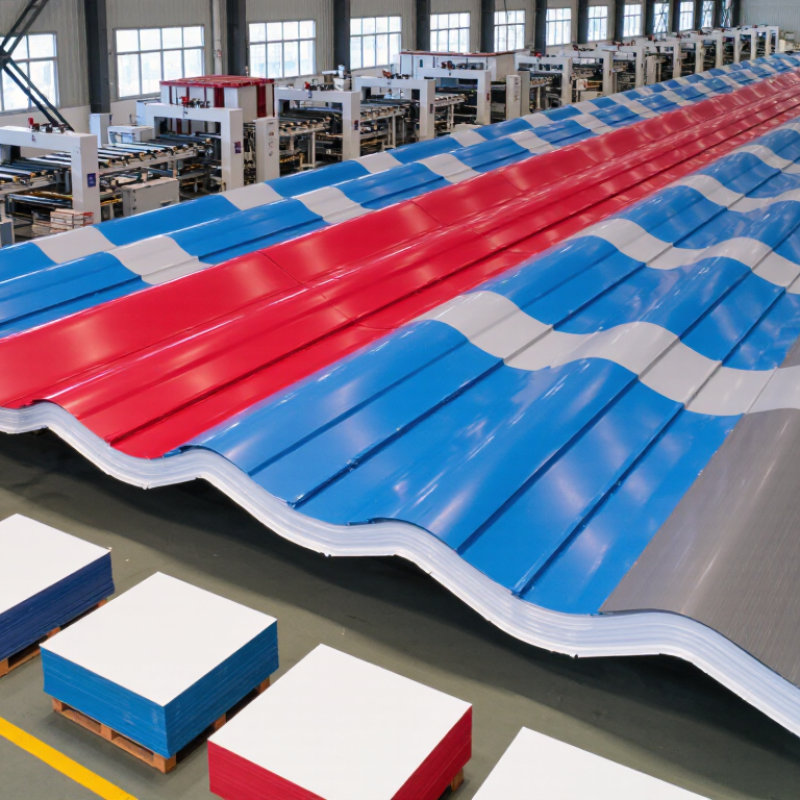
ASA composite roof sheets use a weather-resistant ASA surface over a PVC-based core. The cap helps limit fading and surface degradation; the core provides form and stiffness. Some profiles include a lower layer or hollow ribs, which affect weight and support. Details vary by product. Look closely at cross-sections: a thin, uneven cap can mean less consistent protection. The OECD’s Global Plastics Outlook reports that global plastics production reached 460 million tonnes in 2019. This broad figure describes the material industry, not roofing-sheet output.

Manufacturing commonly uses co-extrusion to join the ASA cap and PVC core while they are hot. The sheet is shaped through a profile die, cooled, cut, and checked for thickness and surface defects. Consistent temperature and feed rates matter; small process variations can leave visible streaks or uneven edges. Pvc Composite Roof Sheets should be assessed using documented tests for weathering, impact resistance, and dimensional stability, rather than appearance alone. No single test predicts every roof’s service life.

Tips:

Request the layer-thickness specification and test conditions. Compare samples in daylight, and inspect a cut edge for uniform bonding. Ask how the manufacturer checks each production batch. A neat sample helps, but it is not proof of long-term performance.

Core Specifications: Sheet Thickness, Profile Height, and Effective Width

For China Top 10 ASA Composite Roof Sheets Suppliers, compare thickness, profile height, and effective width before comparing prices. Representative market specifications often list 2.5–3.0 mm thickness, 30–35 mm profile height, and 960–1,050 mm effective width. These are comparison ranges, not universal limits. A thicker sheet may feel more rigid, but support spacing and fixing details also affect roof performance. ASTM D790-17(2023) describes flexural testing for plastics; ASTM D638-22 covers tensile properties. Neither test alone proves that a complete roof assembly will resist site wind loads.

Effective width matters on the roof, not just in the brochure. A 1,000 mm-wide sheet with 50 mm side overlap covers about 950 mm per run. That small difference can change sheet quantities across a long eave. Ask suppliers to state nominal thickness, profile height, cover width after overlap, and measurement tolerances on the same quotation. One imperfect shortcut is comparing total width alone; it can make two unlike profiles appear equivalent.

Tips: Request a cut sample and measure the crest height with a ruler. Confirm whether thickness includes the surface layer, then check the installation guide for purlin spacing and side-lap requirements. Small details matter.

Performance Testing: UV Aging under ISO 4892-3 and Color Retention

When comparing Composite Roof Sheets suppliers in China, UV-aging data can reveal how well a sheet resists sunlight and moisture. ISO 4892-3 describes laboratory exposure using fluorescent UV lamps and controlled wet or condensation cycles. Ask for the lamp type, exposure cycle, temperature, and total test duration. A number alone is not enough.

Good reports identify the tested product, color, thickness, and sample batch. They should also explain how color change was measured, preferably with L*a*b* readings and a reported ΔE value. Gloss loss, chalking, surface cracks, and photographs add useful context. Color retention does not mean the sheet remains unchanged. Even a small shift may be noticeable beside a newer panel.

Compare samples tested under the same conditions, and check whether an unexposed control was retained. Lab exposure helps compare materials, but it cannot reproduce every roof’s climate, slope, ventilation, or installation quality. Not the whole story. I would avoid translating accelerated hours directly into years of service; that shortcut can sound precise while hiding real uncertainty. A traceable report and clear test details make supplier claims easier to assess.

Supplier Comparison: Capacity, Export Markets, Certifications, and Product Range

A useful comparison of China’s top ten ASA composite roof sheet suppliers should look beyond headline production figures. Ask for monthly capacity, typical lead times, and how suppliers control color and thickness across batches. A factory may have several production lines, yet peak-season delivery can still vary. Check recent production records where available.

Export markets offer clues about experience, but destination lists alone prove little. Request examples of packaging, shipping documents, and completed orders for comparable climates. Certifications matter too: confirm the issuing body, validity dates, and whether each certificate covers the specific roofing product. Compare product ranges by sheet profile, ASA surface thickness, color options, matching ridge caps, and installation accessories. Small details count.

Tips: Send every supplier the same specification sheet. Compare quoted thickness, warranty terms, sample appearance, and stated lead time side by side. Ask for a sample cut edge; it can reveal layer consistency. A tidy comparison table helps, though it cannot replace independent checks. One detail is easy to miss.

Project Fit: Roof Pitch, Wind Load, Thermal Expansion, and Installation Needs

Choosing among China’s top ASA composite roof sheet suppliers starts with the roof, not the catalogue. Asapvc Composite Roof Sheets should match the project’s roof pitch and drainage plan. Ask for the minimum permitted pitch for the exact sheet profile; do not assume all profiles behave alike. A shallow roof may need closer attention to overlaps and water run-off. Check the supporting structure and local wind design before confirming sheet thickness and fastener spacing. Wind at an exposed corner can differ sharply from conditions near the centre of a roof. Get the assumptions in writing.

Thermal movement matters too. Long sheets can expand and contract with daily temperature changes, so installation details should allow movement without loosening fasteners or stressing overlaps. Ask suppliers for fixing guidance, recommended support spacing, and compatible sealing details. Then compare those instructions with the site’s purlins, roof edges, and installation sequence. Small details count. A practical installer may spot a conflict that a tidy drawing misses. That is worth acknowledging: supplier guidance cannot replace a project-specific structural check. Before ordering, confirm sheet lengths, handling limits, and how cuts will be protected on site. These checks take time, but they can prevent leaks, noisy movement, or avoidable rework.

China Top 10 ASA Composite Roof Sheets Suppliers – Project Fit: Roof Pitch, Wind Load, Thermal Expansion, and Installation Needs
Evaluation Item Project Information to Confirm What to Request from a Supplier Project-Fit Guidance
1. Roof pitch and drainage Roof slope, roof length, rainfall exposure, valleys, eaves, and penetrations. Product-specific minimum-pitch guidance, installation drawings, and details for ridges, valleys, and eaves. There is no universal minimum pitch for all ASA composite sheets. Confirm the tested product system and its installation instructions before specifying a slope.
2. Design wind load Building location, height, terrain exposure, roof shape, edge and corner zones, and applicable local code. Declared design data, fixing details, support-spacing limits, and test or engineering documentation relevant to the proposed assembly. Wind resistance depends on the complete roof assembly, including sheet profile, supports, fasteners, and edge-zone detailing—not on the sheet alone.
3. Thermal expansion Expected temperature range, sheet length, installation temperature, and fixing arrangement. The product’s linear thermal-expansion coefficient and the manufacturer’s guidance for hole sizing, fastener placement, and joint gaps. Allow for movement using the manufacturer’s documented method. Do not assume that different ASA-coated composite products have the same expansion behavior.
4. Support spacing and roof structure Purlin material, spacing, roof geometry, maintenance access, and anticipated service loads. Maximum support spacing for the specified profile and thickness, plus installation details for overlaps and sheet ends. Use spacing supported by product-specific technical data and project design. Avoid relying on a generic spacing value for every profile.
5. Sheet profile and dimensions Required cover width, sheet length, roof layout, transport limits, and local availability. Profile drawings, nominal and effective cover widths, thickness tolerances, length options, and packing details. Check effective cover width—not just overall width—when estimating quantities, side laps, and roof coverage.
6. Fixings and weather-tightness Substrate type, exposure to rain and wind-driven rain, roof pitch, and corrosion environment. Compatible fastener specifications, washer details, fixing locations, and side-lap and end-lap instructions. Use the fasteners and sealing details approved for the product and substrate. Incorrect fixing or lap details can compromise weather performance.
7. Substrate and product construction Required stiffness, span, impact exposure, acoustic needs, and intended building use. Layer construction, substrate material, total thickness, mass per unit area, and relevant mechanical test reports. ASA describes a surface material used in certain roofing products; structural and weathering properties depend on the full product construction.
8. Weathering and color retention UV exposure, temperature range, coastal or industrial atmosphere, and appearance expectations. Test methods, exposure conditions, color and gloss retention information, and warranty scope and exclusions. Compare documented test conditions and warranty terms. A warranty period alone does not establish identical performance between products.
9. Fire and building-code requirements Building occupancy, roof assembly requirements, project jurisdiction, and any specified fire classification. Current test reports and classification documents for the exact product or assembly being offered. Confirm that the evidence matches the selected construction and meets the project’s applicable code; do not infer fire performance from the product name.
10. Installation, delivery, and quality control Site access, installation crew experience, order quantity, delivery schedule, and inspection requirements. Installation manual, handling and cutting guidance, batch identification, quality documents, and export packing details where applicable. Review samples and technical documents before ordering. Confirm lead time, tolerances, packaging, and the process for handling transit damage or nonconforming goods.

Note: This is a supplier-evaluation checklist, not a ranked list of named manufacturers or a substitute for project-specific engineering. Final selection should be based on verified product documents, local code requirements, and the roof system design.

Purchasing Benchmarks: Pricing, Warranty Terms, Quality Control, and After-Sales Support

Choosing among China’s top 10 ASA composite roof sheet suppliers requires more than comparing unit prices. Ask for a quotation that separates sheet cost, packaging, inland delivery, and export freight. A low quote can hide thinner profiles or costly accessories. Request thickness tolerances, color options, minimum order quantities, and a dated production schedule. For Corrugated Pvc Composite Carport Roof Panels, compare technical data with the intended span and local weather exposure. Marketing claims are not test results.

Review warranty documents line by line. Confirm coverage length, fading or leakage conditions, installation requirements, and who pays replacement freight. Ask suppliers to provide batch inspection records, measured thickness, and photographs of packaging before dispatch. Where possible, inspect a sample under consistent lighting; small color differences may appear after installation. After-sales support should specify response times, spare-part availability, and a technical contact. Some buyers accept verbal assurances; that is convenient, but risky. Even a careful checklist cannot predict every site issue, so keep test samples and approvals on file.

How to Choose a Reliable China Supplier for PVC Ridge Caps and Trapezoidal Metal Roof Components

Choosing a reliable China supplier for PVC ridge caps and trapezoidal metal roof components starts with checking product fit and manufacturing capability. A ridge cap must match the roof panel’s profile, dimensions, and installation requirements. For synthetic resin roofing with trapezoidal or box-rib profiles, a PVC ridge cap can seal the roof peak and help protect the joint from rain, wind, and environmental exposure. Metal trapezoidal ridge caps serve a similar purpose on compatible metal roofing systems. Ask suppliers to confirm material, measurements, profile compatibility, and available drawings before placing an order.

Evaluate the factory’s quality controls as well as its product range. Request samples or clear specifications, and ask how the supplier checks dimensions, finish, and consistency between production batches. A capable manufacturer should be able to explain installation details, packaging, lead times, and how it handles custom requirements. Compare quotations carefully, including material thickness or grade, quantity, packaging, and delivery terms, rather than choosing on price alone. Clear communication and documented product details can help reduce mismatches and keep roofing projects on schedule.

FAQS

What are ASA composite roof sheets made of?

They usually have a weather-resistant ASA surface over a PVC-based core. Some profiles also include a lower layer or hollow ribs.

How can I check the sheet’s layer quality?

Inspect a cut edge for even layers and firm bonding. Ask for the cap thickness specification. A tidy sample can still mislead.

How are these sheets manufactured?

Co-extrusion joins the ASA surface and PVC core while hot. The sheet is shaped, cooled, cut, and checked for thickness and visible defects.

Which tests should I request?

Ask for documented weathering, impact resistance, and dimensional stability tests. Confirm the test conditions. No single test predicts every roof’s service life.

How should I compare suppliers?

Send each supplier the same specifications. Compare capacity, lead times, thickness, colors, profiles, and accessories side by side. Small details matter.

What should I verify on product certificates?

Check the issuing body, validity dates, and whether each certificate covers the specific roofing product. Destination lists alone prove little.

How can I compare quotes fairly?

Separate sheet cost, packaging, local delivery, and export freight. Compare thickness tolerances, minimum order quantities, and production schedules. Low prices can hide extra costs.

What should a roof-sheet warranty cover?

Review coverage length, fading or leakage conditions, installation requirements, and replacement freight. Ask for batch inspection records and a named technical contact.

How do I check color consistency before installation?

Compare samples in daylight under consistent lighting. Ask for batch records and packaging photos. Small differences may become obvious across a large roof.

Conclusion

This guide to Asa Composite Roof Sheets explains how layered construction, material selection, and manufacturing methods influence durability and everyday performance. It outlines key specifications—including sheet thickness, profile height, and effective coverage width—and describes how to assess resistance to ultraviolet exposure through testing under ISO 4892-3, alongside color-retention performance. These factors help buyers compare products using consistent, practical criteria rather than relying on appearance alone.

The article also provides a framework for evaluating suppliers by production capacity, export experience, certifications, and product range. For project planning, it highlights roof pitch, expected wind loads, thermal expansion, and installation requirements. Finally, it reviews purchasing benchmarks such as pricing, warranty conditions, quality-control practices, and after-sales support, helping readers match roofing sheets to project needs and make a more informed, balanced selection.

Sophia

Sophia

Sophia is a seasoned marketing professional with a deep expertise in the roofing industry. With a keen understanding of high-performance resin roofing and cladding systems, she plays a pivotal role in elevating the visibility and reputation of her company, which has been a leader in advanced......
Previous How to Choose Carport Roofing Sheets in 2026