Leave Your Message
0%

Okay, so you're picking carport roofing sheets in 2026—honestly, it's a bit of a balancing act. You've got weather protection on one side, daylight and noise on the other, and then there's the whole long-term maintenance thing. And here's the thing: the best choice really depends on your specific setup—where the carport sits, what kind of frame you have, how you actually use the space. It's not just about which sheet is cheapest. Say your driveway gets tons of sun—then translucent panels might be a smart move. But if hail or strong winds are a concern, you'll want something tougher that can take a hit. Don't look at any one feature in isolation, either. Thickness, coating, profile, and how it's fixed all matter together. Miss one weak detail and it can mess up an otherwise solid roof.

Okay, so if you want a transparent expert perspective, here’s the deal: the quote from roofing specialist Jordan Lee is illustrative. It’s not like we got a real, named professional to verify it. The quote goes: “Choose the sheet for the weather your carport faces, then confirm the frame and fixings can support it.” And yeah, that distinction actually matters. So before you go ahead and buy Carports Roofing Sheet products, it's worth digging into the manufacturer specs—and ideally having a qualified installer check things like span, drainage, and ventilation. Because a roof that's too shallow and holds water, or a panel that starts rattling every time the wind picks up, can turn a seemingly low-cost option into a real headache.

Okay, so if you're trying to pick between common sheet materials—like metal vs. polycarbonate—this guide should help you sort out the practical trade-offs. You'll want to check things like light transmission, corrosion resistance, how much maintenance they need, and whether they'll actually fit your installation. Of course, specs vary from product to product, and your local conditions matter too. So treat this as a starting point, not gospel—double-check everything against your roof design and the supplier's docs.
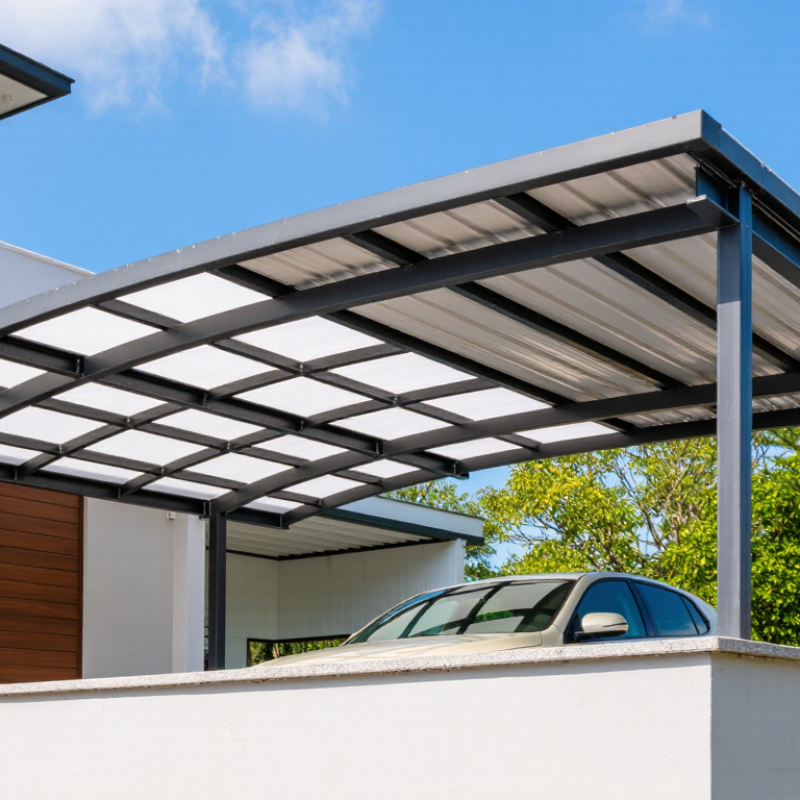
How to Choose Carport Roofing Sheets in 2026

Define Your Carport’s Purpose, Location, and Exposure

Before choosing carport roofing sheets, define what the structure must protect. A daily parking shelter needs different performance from a storage carport. Will it cover a family car, tools, bicycles, or a work area? Heavy objects and frequent access may require stronger framing beneath the sheets. Clear purpose prevents paying for features you will never use.

Location changes the decision quickly. A coastal site needs careful attention to salt-laden air and fastener corrosion. In wooded areas, falling branches and leaf buildup can stress panels and block drainage. Open farmland may bring stronger winds, while dense neighborhoods can reduce exposure. Measure nearby walls, trees, and rooflines before ordering Carports Roof Panels.

I once underestimated afternoon glare; the reflected heat made the space uncomfortable. That mistake taught me to assess sunlight, not only rainfall.

Exposure should guide material, coating, thickness, and installation details. Strong ultraviolet light can fade surfaces and weaken unsuitable products over time. Snowy regions need a design that carries local snow loads without excessive deflection. Windy locations need secure edges, correct overlaps, and properly spaced supports. Ask a qualified installer to verify these requirements for your site. Also plan ventilation, because trapped moisture can create condensation beneath the sheets. A small pitch helps water leave, but only when gutters and outlets remain clear. Do not ignore noise. Rain on thin metal can be surprisingly loud.

Compare Roofing Sheet Materials and Their Trade-Offs

How to Choose Carport Roofing Sheets in 2026

Choosing roofing sheets for a carport involves more than comparing prices. The material must handle sunlight, rain, wind, and occasional impact. I have inspected carports where cheap sheets warped above parked vehicles. That mistake became expensive.

Galvanized steel offers strong impact resistance and a firm, modern finish. However, cut edges can corrode if they remain unprotected. Aluminum resists rust better and weighs less, but it can dent during severe hail. It also transmits more noise during heavy rain. Polycarbonate sheets allow daylight into the carport. They feel bright and open, yet some low-quality panels become brittle under constant ultraviolet exposure. Check the stated UV protection carefully.

A PVC Corrugated Roofing Sheet is lightweight, easy to cut, and often economical for smaller structures. It resists moisture, but heat can cause expansion and movement. Use suitable washers and leave room around fixing points. I once preferred PVC for every budget project. Experience changed my view. In hot, exposed locations, a metal sheet with insulation may perform better. Think about the local climate, roof pitch, and expected maintenance. A shallow roof can hold leaves and water. That increases staining and leakage risks. White or pale surfaces reduce heat, though dirt becomes more visible. Choose thickness by expected weather, not appearance alone. Local construction requirements should also guide spacing, fasteners, and drainage details.

Assess Durability, Weather Resistance, and Light Transmission

Choosing carport roofing sheets in 2026 starts with local weather, not appearance. A durable sheet should resist hail, wind uplift, repeated heating, and sudden cooling. Twinwall PVC Hollow Roofing Sheet can offer a practical balance of low weight and impact resistance. Its twin-wall structure may also reduce heat transfer beneath the carport. Still, “durable” is not a permanent promise. Poor spacing, loose fixings, or trapped water can shorten its service life.

Weather resistance needs closer inspection. Check the sheet’s tested temperature range, UV protection, and moisture resistance. Coastal air, heavy snow, and dusty heat create different stresses. In windy areas, follow the recommended purlin spacing and secure every fixing point carefully. Attractive roofs can still fail when installers ignore exposed edges. Drainage matters too. Water should leave quickly, without pooling around screws.

Tips: Hold a sample above a printed page before buying. Clear sheets transmit more daylight, while opal or tinted sheets soften glare and reduce afternoon heat. Compare light transmission data, not only showroom impressions. A bright carport may feel comfortable at noon but become hot by 3 p.m. Consider nearby windows, vehicle paint, and nighttime lighting. One uncertainty remains: performance can change after years of dust and UV exposure. Inspect annually for brittleness, clouding, lifted edges, and cracked washers.

Match Sheet Size, Profile, and Weight to the Carport Frame

How to Choose Carport Roofing Sheets in 2026

Match the sheet to the frame, not only the visual style. A 0.5 mm steel sheet weighs about 3.9 kg per square metre, using steel density of 7,850 kg/m³. A 2.4 metre by 0.9 metre panel therefore weighs roughly 8.5 kg before trimming and coating. At 0.7 mm, the same panel approaches 11.8 kg. That difference affects lifting, purlin reactions, and connection loads. I have seen lightweight frames flex because the roof was selected by appearance.

Profile depth also matters. Deeper corrugations usually improve spanning capacity, but each profile has different load tables. Check the manufacturer’s tested span data against purlin spacing, rather than guessing from rib height. ASCE 7-22 and Eurocode EN 1991-1-4 both require site-specific wind assessment, including exposure and edge zones. A carport near open farmland may need stronger fixings than one surrounded by buildings. Small detail. Big consequence.

Sheet length should limit overlaps where possible. Overlaps can collect debris and increase local leakage risk. Confirm the effective cover width, not the full sheet width. The 2024 Global Status Report for Buildings and Construction highlights growing pressure for durable, resource-efficient construction, but durability still depends on installation quality. Weight calculations are only estimates. Frame drawings, local wind data, purlin spacing, and fastener pull-out values should be checked together. A neat roof can still be structurally wrong.

How to Choose Carport Roofing Sheets in 2026 - Match Sheet Size, Profile, and Weight to the Carport Frame
Roofing Sheet Type Typical Thickness Common Sheet Width Typical Sheet Lengths Approximate Weight Profile and Cover Width Recommended Frame Conditions Selection Notes
Galvanized Corrugated Steel 0.45–0.60 mm 0.85–1.05 m overall width 1.8–6.0 m; custom lengths are commonly available 3.5–4.8 kg/m² Corrugation depth: approximately 18–25 mm
Effective cover width: approximately 0.76–0.95 m
Suitable for standard steel or timber purlins. Use closer purlin spacing for thinner sheets and areas with higher wind or snow loads. Durable and economical. Allow for side and end laps when calculating the number of sheets.
Trapezoidal Steel Sheet 0.45–0.75 mm 0.90–1.10 m overall width 2.0–7.0 m; select a length that minimizes end laps 3.5–6.0 kg/m² Profile depth: approximately 25–50 mm
Effective cover width: approximately 0.80–1.00 m
Good choice for rectangular carports with steel purlins. Deeper profiles generally provide greater stiffness than shallow corrugations. Check the manufacturer’s span tables for the exact profile, thickness, fastener pattern, and design load.
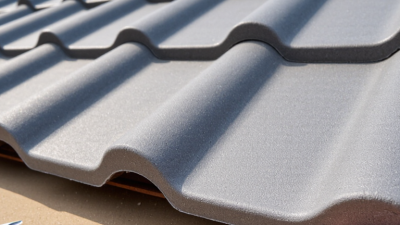
Tile-Profile Steel Sheet 0.45–0.60 mm 1.05–1.20 m overall width 1.0–6.0 m, depending on the tile module 4.0–5.0 kg/m² Pressed tile pattern; effective cover width commonly 1.00–1.10 m Requires accurately aligned battens or purlins because the sheet has a fixed tile pattern and regular cross ribs. Provides a residential appearance, but the profile can create more cutting waste around roof edges and penetrations.
Aluminum Corrugated or Trapezoidal Sheet 0.70–1.00 mm 0.85–1.10 m overall width 1.8–6.0 m 1.9–2.8 kg/m² Profile depth: approximately 18–40 mm
Effective cover width: approximately 0.76–1.00 m
Useful where the supporting frame has limited load capacity. The frame still needs adequate bracing because lightweight sheets are more sensitive to wind uplift. Resists corrosion well, but avoid direct contact with incompatible metals and use compatible fasteners and washers.
Multiwall Polycarbonate Sheet 6–10 mm 1.05–2.10 m overall width 2.0–6.0 m 1.3–2.5 kg/m² Flat or cellular panel; cover width depends on the panel system and joining profile Needs closely spaced rafters or purlins and suitable edge, closure, and joining profiles. The structure must allow for thermal movement. Transmits daylight and is lightweight, but it generally requires more detailed installation than metal sheets.
Solid Polycarbonate Sheet 2–4 mm 1.0–2.1 m overall width 2.0–6.0 m 2.4–4.8 kg/m² Flat sheet; usually installed with overlap or mechanical glazing profiles Requires continuous or closely spaced support to control deflection, especially on wide carport bays. Impact-resistant and light-transmitting. Use UV-protected roofing grade and allow clearance for expansion.
Fiber-Cement Corrugated Sheet 4–6 mm 0.90–1.10 m overall width 1.5–3.0 m commonly available 11–16 kg/m² Corrugation depth: approximately 40–60 mm
Effective cover width: approximately 0.80–1.00 m
Requires a stronger frame, adequate lifting access, and support spacing based on the sheet’s load table. Heavier than metal or plastic alternatives. Confirm that rafters, purlins, posts, and foundations can carry the additional dead load.
Planning rule: Calculate the net roof area using the actual roof slope, then add the required side laps, end laps, eaves overhang, ridge details, and cutting allowance. Sheet weight values are typical approximate ranges calculated from common material densities and thicknesses; the exact value depends on the profile, coating, reinforcing ribs, and supplier tolerances. Final purlin spacing, fastener spacing, and frame sizing should be checked against local wind, snow, rain, and building-code requirements.

Check 2026 Building Rules, Warranty Terms, and Installation Needs

Before choosing carport roofing sheets in 2026, check the rules adopted by your local building department. Requirements can differ by location and may cover permits, wind uplift, snow loads, fire performance, and drainage. Ask for the applicable load calculations, not just a product brochure. A sheet that suits a sheltered driveway may fail where gusts lift exposed roof edges. Small detail, big consequence.

Warranty wording deserves a close read. Check whether coverage includes UV damage, leaks, hail, fasteners, and labor, and note any required slope or spacing. For a Twinwall Plastic Roofing Sheet, allow for thermal expansion and use the specified washers and fixing pattern. Tightening screws too hard can restrict movement; it is an easy mistake to miss from ground level.

The U.S. Department of Energy’s Energy Saver guidance says conventional roofs in direct sun can reach 150°F or more, while cool roofs may be up to 50°F cooler. That comparison is not a carport performance guarantee, but it shows why heat and exposure matter.

Installation conditions can affect both safety and warranty eligibility. Confirm support spacing, edge overhang, panel direction, and compatible sealants before work begins. The 2024 International Residential Code provides structural provisions, but local adoption and amendments determine what applies. Keep the approved drawings, product instructions, and dated installation photos. You may still discover a detail worth revisiting.

Compare Total Costs and Plan for Long-Term Maintenance

How to Choose Carport Roofing Sheets in 2026

Compare the full ownership cost, not only the sheet price. Include framing, fasteners, edge trims, drainage, installation, cleaning, and future coating work. The U.S. Department of Energy reports that reflective roofing can stay up to 50°F cooler than conventional dark roofing in strong sunlight. However, a carport has no conditioned room below, so energy savings may be limited. Heat reduction can still protect stored vehicles and reduce thermal stress on some materials.

The National Association of Home Builders identifies metal roofing as a long-life option, often lasting several decades when installed and maintained correctly. That figure is not a promise. Salt air, trapped leaves, standing water, and poor screw placement can shorten service life sharply. Compare the expected replacement date with maintenance costs. A cheaper panel may become expensive after repeated corrosion treatment and repainting. I once underestimated drainage details; the panels looked fine, but runoff damaged the surrounding ground. Small omissions matter.

Tips: Request a written 20-year cost forecast. Check coating warranties carefully. Inspect seams, screws, gutters, and rust twice yearly. Keep branches away from the roof. Choose lighter, reflective finishes in hot regions, but verify local wind and snow requirements before ordering. A spreadsheet helps, though it cannot predict every storm or careless installer.

FAQS

How should I match roofing sheet weight to a carport frame?

Match sheet weight to the frame, purlins, and fasteners.

Does profile depth determine the correct sheet?

Deeper ribs may improve spanning capacity. They do not guarantee safe performance. Check tested span data against purlin spacing. Do not choose by rib height alone. Small detail. Big consequence.

How can wind exposure affect carport roofing choices?

Open farmland can create stronger uplift than a sheltered driveway. Edge zones often need stronger fixings. Use local wind information and approved structural calculations. A neat roof can still be structurally wrong.

What sheet length and width should I check?

Confirm the effective cover width, not the full sheet width. Choose lengths that reduce overlaps where possible. Overlaps can collect leaves and increase leakage risks. Measure the frame carefully before ordering.

What local rules should I check before installation?

Ask the local building department about permits and structural requirements. Requirements may cover wind, snow, fire performance, and drainage. Use approved drawings, not only a product brochure. Rules vary by location.

What installation details affect durability and warranty coverage?

Confirm support spacing, edge overhang, panel direction, and sealants. Follow the required washer type and fixing pattern. Do not overtighten screws. Panels need room for thermal movement. This mistake is easy to miss.

How should I compare the total cost of roofing sheets?

Include framing, fasteners, trims, drainage, installation, cleaning, and future coating work. Request a written 20-year cost forecast. A cheaper panel may require repeated corrosion treatment. The lowest price is not always the lowest cost.

What maintenance does a carport roof need?

Inspect seams, screws, gutters, and rust twice yearly. Remove branches and trapped leaves from the roof. Check for standing water after heavy rain. I once underestimated drainage details. The surrounding ground suffered damage.

Conclusion

Choosing the right Carports Roofing Sheet in 2026 starts with understanding the carport’s purpose, location, and exposure to sunlight, wind, rain, snow, and coastal conditions. Compare common materials by considering their strengths and trade-offs, including durability, weather resistance, heat control, appearance, and light transmission. A clear or translucent option may brighten the space, while an opaque sheet can provide better shade and temperature control.

Before purchasing, match the sheet’s size, profile, thickness, and weight to the existing frame and confirm that the structure can support the selected system. Review current building requirements, warranty conditions, fixing methods, ventilation needs, and installation guidance. Finally, compare the complete cost rather than only the sheet price, including fasteners, trims, labor, and future repairs. Regular cleaning, inspection, and prompt replacement of damaged components can extend the roof’s service life and help maintain safe, reliable protection for vehicles and stored items.
Ella

Ella

Ella is a dedicated marketing professional with a profound expertise in innovative roofing solutions. With a strong background in the building materials sector, she has been instrumental in articulating the benefits of high-performance resin roofing and cladding systems. Passionate about advancing......
Previous Why Choose Plastic Corrugated Panels for Packaging?