Picking the right PVC roofing supplier in China isn’t just about comparing prices—there’s a bit more to it. Sure, a shiny, spotless factory floor and a smooth sample sheet can give you a good first impression, but they don’t really tell you if the product will hold up over the long run. It’s smart to check out things like the thickness of the membrane, the reinforcement used, how consistently seams are welded, what kind of installation guidance they provide, and whether they’ve got solid experience with similar projects.
The EPA mentions that reflective cool roofs can stay up to about 50°F (28°C) cooler than regular roofs when it’s sunny out. But keep in mind, that’s just a surface temperature, not a guarantee of energy savings. Actual results depend on your local climate, how well your building is insulated, and overall design. ASTM standards are also pretty handy—they provide methods to test things like flexibility and how well the material withstands weather. Just a heads-up: neither of these sources ranks Chinese suppliers; think of them more as useful technical info rather than endorsements.
When talking to potential suppliers, make sure they can back up their claims. Ask for test reports, clear product specs that you can trace back, warranty info, and examples of similar projects they’ve worked on. Don’t hesitate to ask how they check seams on-site, or what they do if a batch isn’t up to par—those little details really matter.
One thing to keep in mind is that public info about suppliers isn’t always super comparable. So, this guide mainly focuses on what you can verify—facts and proven capabilities—rather than flashy claims. Also, I won’t attach quotes from supposed PVC roofing experts unless I can trace where they came from. Faking expertise just makes you doubt their credibility, and that’s the last thing you want when making such a big decision.
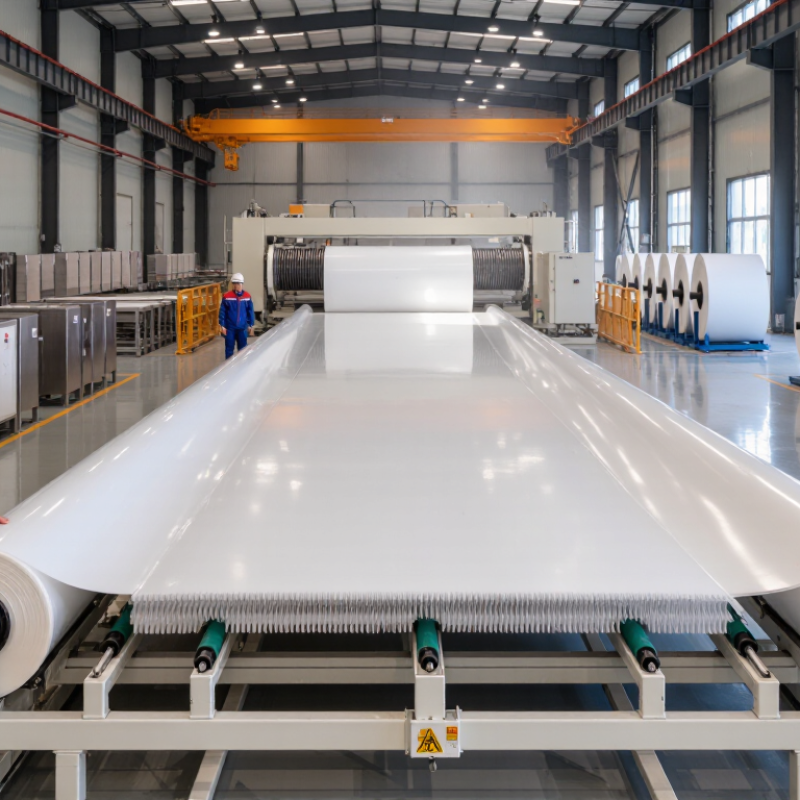
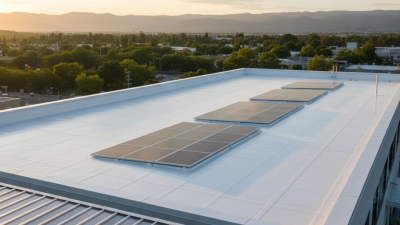
PVC roofing systems use flexible sheets made from polyvinyl chloride. They are commonly installed over warehouses, factories, retail buildings, and low-slope commercial roofs. Hot-air welding joins overlapping sheets into continuous seams. This reduces open joints where water can enter. Reinforced membranes add polyester scrim for better dimensional stability. Unreinforced sheets suit smaller details and complex edges.
The U.S. Department of Energy reports that reflective roofs can reduce peak cooling demand by about 10–15% in suitable buildings. That benefit depends on insulation, climate, roof orientation, and indoor activity. A 2024 Grand View Research report also identifies commercial construction as a major PVC roofing membrane application. The market is expanding, but forecasts differ between research firms. That difference deserves attention.
For Chinese suppliers, buyers should request tensile strength, tear resistance, seam-peel results, thickness tolerance, and accelerated weathering data. Independent testing under ASTM or EN methods improves confidence. Ask for production samples, not only brochures. Corrugated resin roofing solutions can work well for agricultural buildings, workshops, and lightweight extensions, but they are not identical to reinforced PVC membranes. Check drainage design carefully. Small errors become leaks.
A practical inspection should examine welded seams, edge fasteners, penetrations, and ponding water after installation. PVC can resist many chemicals, yet compatibility must be verified before exposure. No system is perfect. Skilled installation still decides much of the service life. Some specifications also overlook repair access, which can create avoidable maintenance costs.
China’s PVC roofing market serves factories, warehouses, agricultural buildings, and large public facilities. Demand is growing with industrial construction and roof renovation projects. PVC membranes are valued for low weight, heat-welded seams, and resistance to moisture. They can support practical commercial roofing solutions when correctly specified.
The supplier landscape is broad. It includes membrane manufacturers, coating producers, fabricators, and project contractors. Experienced buyers should examine production capacity, raw material consistency, welding performance, and technical support. Factory visits can reveal storage conditions, testing equipment, and actual production discipline. Request recent test reports for tensile strength, dimensional stability, fire performance, and weather resistance. Do not rely only on catalog photographs.
China’s regional differences matter. Northern projects face freezing temperatures, while southern roofs may endure intense rain and humidity. Coastal sites need stronger attention to corrosion and wind exposure. Suppliers with local installation experience may identify these risks earlier. However, the market is not perfectly transparent. Some product claims appear stronger than the available evidence. Independent inspection remains useful.
A reliable evaluation also covers delivery schedules, packaging, warranty terms, and replacement procedures. Ask how seams are tested after installation. Ask who responds when a roof leaks. Small details matter. Price alone can create expensive maintenance problems later. Some suppliers offer flexible customization, yet excessive customization may complicate quality control. Buyers should balance project needs with proven specifications and documented performance.
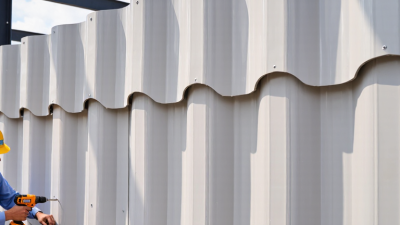
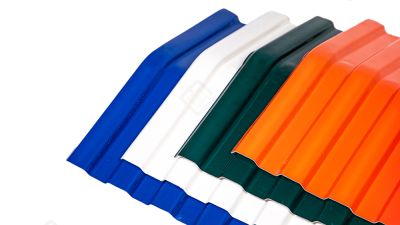
China’s PVC roofing suppliers offer practical products for factories, farms, workshops, and storage buildings. Their main options include corrugated PVC sheets, trapezoidal panels, translucent daylight sheets, ridge caps, flashing, screws, and sealing washers. Tuff-Rib roofing solutions are often selected for simple installation and broad coverage. Sheet profiles, thicknesses, colors, and lengths can usually be adjusted for project needs.
Experienced suppliers should provide technical data before quoting. Ask for thickness tolerance, sheet weight, temperature range, UV resistance, and tested load performance. A reliable manufacturer can also explain overlap distances, screw spacing, cutting methods, and suitable support purlins. I have found that clear installation guidance prevents more problems than attractive product photos. Small details matter. Some suppliers provide samples and production videos, but these should not replace independent inspection.
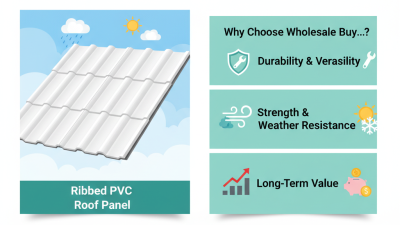
PVC roof panels are lightweight, corrosion-resistant, and easier to handle than many metal alternatives. They can reduce rain noise in certain buildings, although sound performance depends on the structure. In hot climates, pale colors may limit heat absorption, while ventilation remains essential. Buyers should review fire performance and local building requirements with qualified professionals. One weakness is easy to overlook: low-quality sheets may become brittle after prolonged sunlight exposure. A cheaper quote can become expensive after replacement, and I would not ignore that risk.
How to Evaluate China-Based PVC Roofing Suppliers
Evaluating China-based PVC roofing suppliers starts with evidence, not catalog photographs. Grand View Research valued the global roofing materials market at about USD 151 billion in 2023. That scale creates opportunity, but also uneven quality. Ask for current technical data sheets, batch records, and third-party test reports. Check tensile strength, elongation, seam-peel strength, thickness tolerance, and UV resistance. Request samples from different production batches. One sample proves little.
Performance must match the project. The U.S. Environmental Protection Agency reports that cool roofs can reduce peak roof temperatures by up to 50°F. Therefore, verify solar reflectance, thermal emittance, and the complete insulation design. Confirm compliance with recognized standards, such as EN 13956 or ASTM D4434. Fire classification also requires attention. A supplier should explain the test method, laboratory, date, and tested construction. Vague certificates are warning signs.
Factory capability matters more than sales language. ISO’s certification survey records over one million ISO 9001 certificates worldwide, so certification alone does not guarantee reliable production. Audit raw-material storage, welding equipment, inspection points, and corrective-action records. For B2B roofing solutions, review container loading photos and packaging details. Rolls should remain dry, protected, and clearly traceable. Lead times deserve written confirmation. My own evaluation would still include a small pilot order; documents can look perfect, while installation reveals weak seams or inconsistent thickness. That is an uncomfortable, but useful, reality.
China’s PVC roofing suppliers should be compared on verifiable performance, not catalogue claims. Ask for current test reports covering membrane thickness, tensile strength, dimensional stability, and seam weldability. ASTM D4434/D4434M sets requirements for PVC sheet roofing; request the exact edition and test results, not just a statement of compliance. Check whether an ISO 9001 certificate covers the factory producing your order, and confirm its validity with the issuing body. Small detail, big difference.
Certifications tell only part of the story. FM Approvals’ roof assembly testing evaluates systems under conditions such as wind uplift, so confirm that the tested assembly matches your deck, insulation, and fastening method. For energy claims, Lawrence Berkeley National Laboratory’s cool-roof research reports that reflective roofs can reduce cooling energy use, though savings depend on climate, insulation, and building operation. Ask suppliers for aged solar-reflectance data, not only fresh-sheet readings. Then inspect sample seams after welding: uneven edges or inconsistent thickness deserve questions. A factory audit can reveal more than a polished brochure, but audits also capture only one moment. That limitation is easy to overlook.
Sourcing PVC roofing solutions from China starts with a clear project brief. Specify the roof pitch, weather exposure, required sheet thickness, color, and installation method. These details help suppliers recommend suitable products instead of quoting a generic panel. Ask for technical data sheets that identify material composition, dimensions, and stated performance limits. Vague answers deserve follow-up.
Verify the product, not just the sales documents. Request recent production samples and inspect them under consistent lighting. Check surface finish, flexibility, edge quality, and whether dimensions match the approved specification. Ask how the supplier tests weathering, impact resistance, and water tightness, and whether test reports identify the tested product and method. A certificate without traceable details proves little. Small details matter.
Before placing a large order, confirm packaging, lead time, quality checks, and the process for handling defects. Agree on an inspection plan, including sampling frequency and measurable acceptance criteria. Where practical, arrange an independent pre-shipment inspection. Compare the delivered batch with the approved sample; color and surface texture can vary slightly. That is not always a deal breaker, but it should be discussed openly. One weak point in many sourcing plans is relying on email promises alone. Keep specifications, revisions, and inspection findings in writing, and leave time to resolve discrepancies before shipment.
| Evaluation Dimension | Practical Requirement or Benchmark | What to Verify Before Ordering |
|---|---|---|
| Product type and intended use | Confirm whether the membrane is designed for mechanically attached, fully adhered, or ballasted roofing systems, and whether it is suitable for the project’s roof build-up. | Request the product data sheet, installation instructions, system drawings, and written confirmation of compatibility with the proposed insulation and substrate. |
| Membrane thickness | Common project specifications often call for nominal thicknesses around 1.2 mm, 1.5 mm, or 2.0 mm; the appropriate choice depends on design, exposure, and local requirements. | Check the declared nominal thickness, permitted tolerances, and test method. Arrange independent measurement on pre-shipment samples if thickness is critical. |
| Applicable product standard | ASTM D4434 covers PVC sheet roofing. EN 13956 covers plastic and rubber sheets for roof waterproofing. The applicable standard depends on the destination market and project specification. | Verify the exact standard edition, product scope, test results, and report issuer. A reference to a standard alone is not proof that a particular product has passed testing. |
| Weathering and dimensional performance | UV exposure, heat ageing, low-temperature flexibility, and dimensional stability are relevant to long-term roof performance. | Review test reports for the offered formulation and thickness, including sample identification, test conditions, results, and report date. |
| Seam and welding performance | PVC roofing sheets are commonly joined by hot-air welding. Reliable seams depend on membrane formulation, surface condition, equipment settings, and installer technique. | Request welding guidance and conduct trial welds using production material. Check seam continuity and perform project-appropriate peel or seam-strength testing. |
| Reinforcement and construction | Membranes may be reinforced with a polyester scrim or supplied unreinforced; construction affects strength, flexibility, and intended application. | Confirm reinforcement material, construction, and product designation in the technical data sheet. Match these details to the specification rather than relying on appearance alone. |
| Quality management | A documented quality system can support consistent production, but certification does not replace product testing or inspection. | If ISO 9001 certification is claimed, check the certificate’s validity, scope, issuing body, and covered manufacturing site. Confirm that the site producing the order matches the certificate. |
| Factory and production verification | Confirm who manufactures the goods, where production takes place, and whether the supplier is a factory or a trading intermediary. | Use a live factory audit or independent inspection to compare business and factory records, production equipment, material controls, and the actual manufacturing location. |
| Batch traceability and inspection | Each shipment should be traceable to production records and identified lots, with agreed acceptance criteria. | Agree on pre-production samples, in-process checks, final inspection, labeling, and a batch-specific certificate of analysis or inspection record where applicable. |
| Packaging and shipment condition | Rolls should be protected against moisture, dirt, crushing, and handling damage during storage and transport. | Specify roll dimensions, core protection, wrapping, palletization, shipping marks, and inspection of packed goods before container loading. |
| Commercial terms and landed cost | Compare pricing on the same basis, including membrane specification, quantity, packaging, freight, insurance, duties, and delivery terms. | Request a written quotation with product details, minimum order quantity, lead time, payment terms, Incoterms® 2020 rule and named place, and quotation validity. |
| Samples and order approval | Approve a representative sample before bulk production; a sample should match the specified construction, color, finish, and thickness. | Record sample identification and approval criteria. Retain an approved reference sample and require written notice before any material or process change. |
Verification note: The benchmarks above are sourcing checks, not claims about any particular supplier or product. Confirm applicable codes, test requirements, and acceptance limits with the project designer and destination-market regulations.
High-wave PVC roofing ridge components play an important role in modern roofing systems, where reliable weather protection and compatibility with different roof profiles are key considerations. As roofing markets evolve, demand is shaped by construction activity, renovation needs, material performance, and the search for durable, practical building solutions. In this context, ridge components are more than finishing details: they help protect a roof’s most exposed junction while contributing to a neat, consistent roofline.
Designed for synthetic resin roofing with trapezoidal or box-rib profiles, this PVC roof ridge cap fits the character of metal-roof-style ridge caps, including box-rib and U-panel forms. Installed along the peak, it covers and seals the meeting point between two roof panels, helping limit the entry of rain and wind and reducing exposure to the elements. Its profile makes it a suitable companion for high-wave roofing sheets, supporting a more integrated installation across the roof system. For builders and property owners comparing roofing components, matching the ridge cap to the panel shape is an important part of achieving effective coverage and a clean finished appearance.
PVC roofing uses flexible sheets made from polyvinyl chloride. It suits warehouses, factories, retail buildings, and low-slope roofs. The sheets are joined with hot air. This creates continuous seams and limits water entry.
Reinforced membranes contain polyester scrim for better dimensional stability. Unreinforced sheets work well around edges, penetrations, and small details. The choice depends on roof shape and movement.
Reflective roofs may reduce peak cooling demand by about 10–15% in suitable buildings. Results depend on insulation, climate, roof direction, and indoor activity. The roof color alone is not enough.
Request technical data sheets, batch records, tensile results, tear resistance, and seam-peel tests. Also ask for thickness tolerance and weathering data. Independent laboratory reports provide stronger evidence.
Review raw-material storage, welding equipment, inspection points, and corrective-action records. Ask for recent production samples from different batches. Factory visits may reveal problems hidden by polished brochures.
Northern roofs may face freezing temperatures. Southern roofs often experience heavy rain and humidity. Coastal buildings need careful wind and corrosion assessment. Local installation experience can identify these risks earlier.
Inspect welded seams, edge fasteners, penetrations, and areas with standing water. Small drainage errors can become leaks. Check repair access before the project is finished.
Not always. Cheap materials may create higher maintenance costs later. A small pilot order can expose weak seams or uneven thickness. Documents can look perfect; installation may disagree.
This article explores the essentials of Pvc Roofing Solutions, including how PVC roofing systems work and where they are commonly used in commercial, industrial, and other building projects. It outlines China’s supplier landscape and introduces the main product types available, such as roofing membranes and related system components. The aim is to help readers understand how product design and intended use can influence the choice of roofing solution.
The article also presents practical ways to assess suppliers in China, comparing their manufacturing capabilities, quality-control processes, technical support, and relevant certifications. It explains how buyers can clarify project requirements, request product documentation and samples, and verify supplier information before placing an order. By considering these factors together, readers can make more informed sourcing decisions and identify suppliers whose products and service capabilities align with their project needs.