
How to Build a Beautiful and Durable Roof for Rural Houses?
How to Build a Beautiful and Durable Roof for Rural Houses?
Out in the countryside, a roof has to do more with less help. There's no contractor around the corner for a quick patch job, and the house often sits fully exposed to sun, wind, and rain with nothing around it to soften the blow. So when a family finally gets to build or rebuild, the roof deserves more thought than it usually gets.
Most people picture a rural roof as a practical afterthought — something to keep the rain out, chosen mostly on price. But talk to anyone who's actually finished a countryside build, and the roof is usually one of the first things they mention with pride, or one of the first things they regret. It's the largest visible surface of the whole house. It sets the tone for everything below it, whether the walls are brick, stone, timber, or plaster.
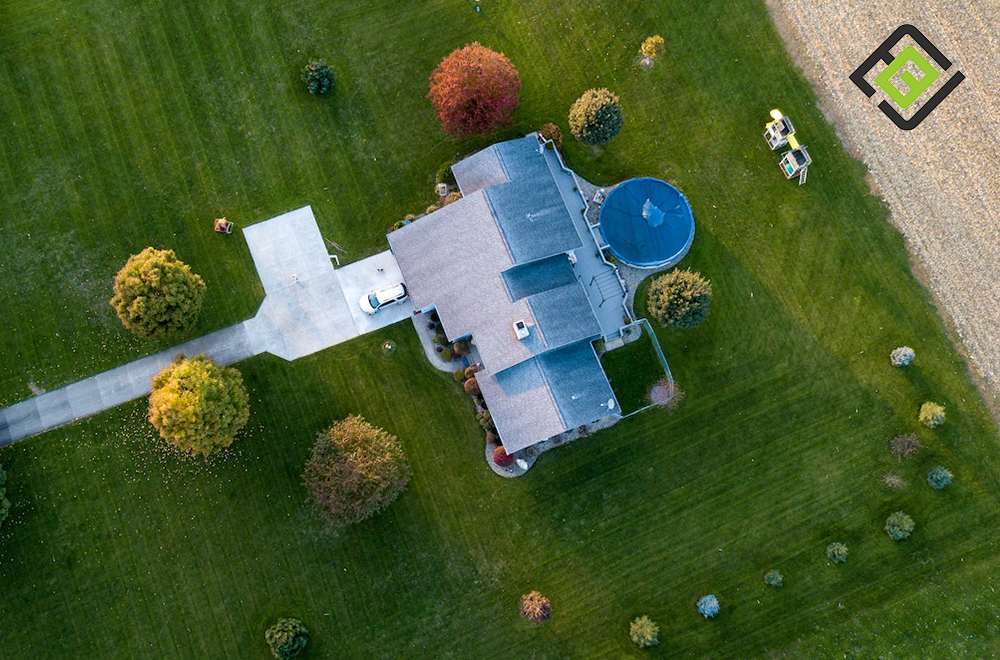
The trouble is that "beautiful" and "durable" often get treated as separate conversations. A family picks a color and shape they like, then separately worries about whether the material will survive twenty years of sun. It doesn't have to work that way. The material itself decides both outcomes at once — how the roof looks on day one, and how it still looks on day 3,650.
Sun and open exposure
Rural plots rarely have tall neighboring structures to cast shade. UV load on the roof is close to constant, and it's the single biggest reason cheaper materials fade, chalk, or crack within a few seasons.
Distance from repair crews
A leak that would get fixed in an afternoon in the city can sit for weeks waiting on a technician to travel out. That makes upfront material reliability worth more than it would be in town.
Blending with the landscape
A house surrounded by fields or hills reads differently than one on a city street. Roof color has to work with the terrain, not just the walls — earth tones, terracotta, deep greens, and warm greys tend to sit more naturally against open land.
One-time budgets
Rural builds are often financed once, with little appetite for a second roofing project a decade later. The real cost comparison isn't price per square meter — it's price divided by the years the roof actually lasts.
A roof isn't just the thing overhead — it's the first detail neighbors notice from the road, and the last thing an owner wants to think about once it's finished.
This is where synthetic resin roof tiles have quietly become the practical answer for a lot of rural and self-build projects. ASA and UPVC composite tiles are formed with color mixed all the way through the material rather than sprayed or painted onto the surface. There's no coating to peel, no thin pigment layer that wears thin after a few dry seasons. The color you install is, for all practical purposes, the color that's still there in fifteen or twenty years — even sitting under open sky with nothing to shield it.
The palette side matters more than people expect, too. Traditional clay comes in a narrow range dictated by the kiln and the clay body itself. Resin tiles aren't limited that way — the manufacturing process supports a much wider spread of colors and finishes, from classic terracotta and Spanish reds through deep greens, greys, and blended tones designed to look weathered from the start. A family building near farmland can pick something that echoes the soil and crops around them instead of settling for whatever a local supplier happens to stock.
Before choosing a roof for a rural build
- ✓ Ask how the color is applied — through the material or on the surface
- ✓ Check what wind speed the interlock and fixing system is rated for
- ✓ Compare weight per square meter against your existing roof structure
- ✓ Confirm the warranty covers color fading, not just breakage
- ✓ Order a sample panel and check it against your walls in real daylight
A quick side-by-side
| Material | Color life | Weight | Typical lifespan |
|---|---|---|---|
| Clay tile | Stable, narrow palette | Heavy | 40–70 yrs, prone to cracking |
| Asphalt shingle | Fades within years | Light | 15–25 yrs |
| Painted metal sheet | Chalks, coating wears | Light | 20–40 yrs |
| ASA/UPVC resin tile | Color runs through the material | Light | 30–50 yrs |
This is exactly the balance we build around at JBE. As a Sichuan-based manufacturer working in ASA, PVC, and UPVC composite systems, our roofing lines — including our Spanish-style tile range — are engineered so the pigment is part of the resin formulation itself, not a surface treatment. It's a small manufacturing decision that ends up being the difference between a roof that still looks intentional after two decades and one that quietly fades into something nobody chose.