
Resin Roof Tile vs. Color Steel Sheet: Why Manufacturing Is Fundamentally Different
Resin roof tiles and color-coated steel sheets are both sold as "lightweight roofing," but the factories that make them barely resemble each other. One runs on chemical formulation and precision extrusion; the other runs on cold-forming steel coil at speed. Understanding why helps explain why the two materials — and the suppliers behind them — are so different to work with.
Ask a distributor why one supplier's resin tiles cost noticeably more than a comparable run of color-coated steel sheets, and most will point to raw material price. That's part of the story, but it misses the bigger one. The two products are made on entirely different types of production lines, sourced from different supply chains, and controlled against different sets of standards. A buyer who understands where those differences actually sit is in a much better position to judge whether a quoted price — high or low — reflects real manufacturing capability.
1. The Production Equipment Is Not the Same Category of Machine
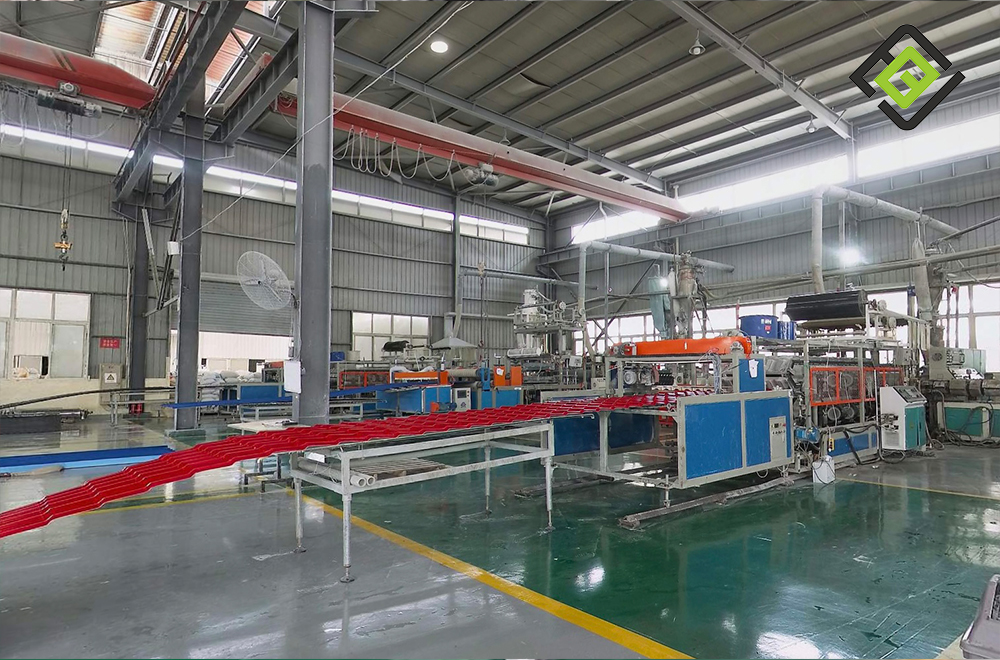
Color-coated steel roofing is formed cold — a coil of pre-painted steel is unrolled and bent, station by station, into a corrugated profile. Resin tile is formed hot and wet — two different polymer melts are extruded together, calibrated, embossed, and cut while the material is still soft. That distinction drives almost everything else about the equipment involved.
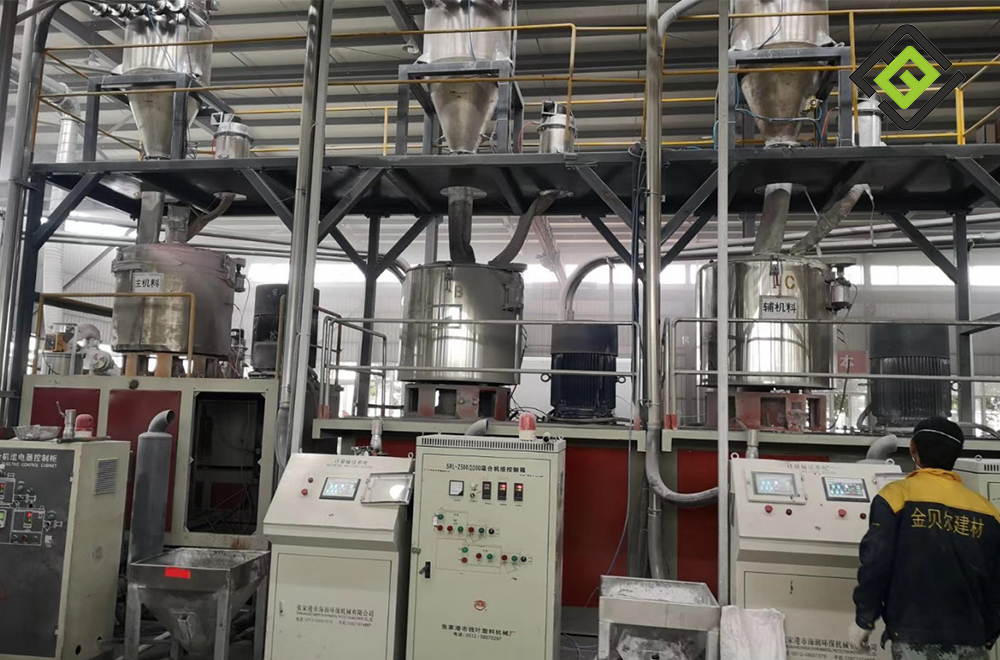
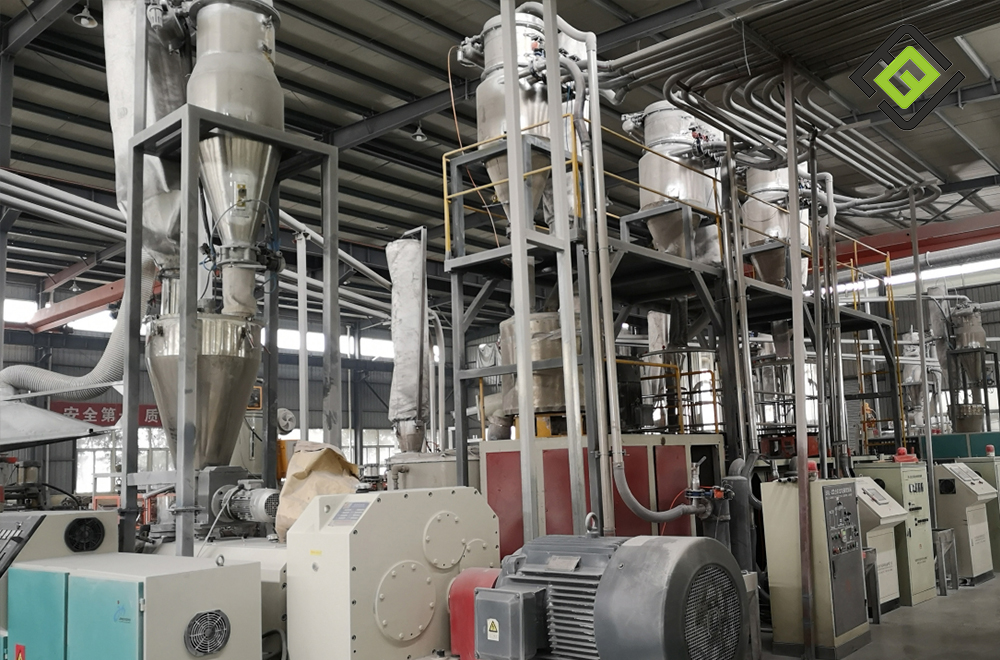
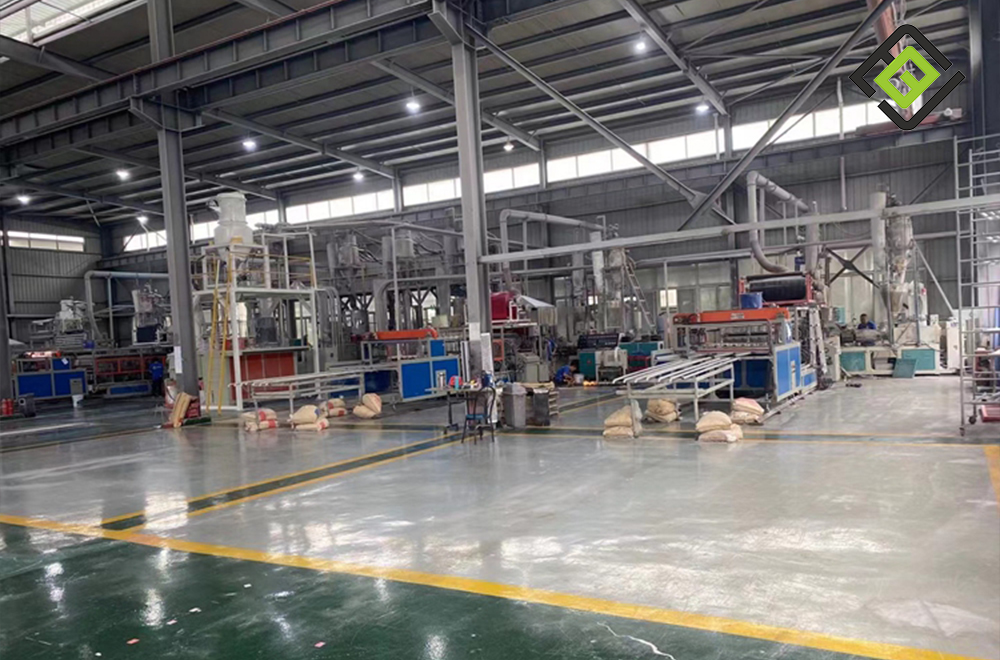
Resin Tile Line (PVC/ASA Co-Extrusion)
- Conical twin-screw extruder for the PVC substrate layer
- Single-screw extruder for the ASA surface layer
- Dehumidifying/vacuum drying hoppers for both resin streams
- Co-extrusion feed distributor and forming die
- Water-temperature calibration and cooling system
- Embossing roller and tile-profile forming unit
- Edge trimming and automatic length-cutting station
- Optional: pulverizer and high-speed mixer for regrind handling
Complete lines from established manufacturers typically run RMB 500,000–900,000 (roughly USD 70,000–125,000), with line speeds of 2–3 m/min and combined output around 350–400 kg/h. Entry-level lines exist for well under RMB 300,000, but buyers in the industry consistently note that cheaper lines struggle with surface finish and embossing depth.
Color Steel Sheet Line (Roll-Forming)
- Coil uncoiler / decoiler and feed guide platform
- Series of progressive cold-forming rollers
- Hydraulic shearing and cutting station
- PLC control cabinet and hydraulic pump station
- No melting, mixing, or drying stage — the coating arrives pre-applied
Basic roll-forming machines are widely available from around RMB 20,000–100,000 (roughly USD 2,800–14,000). Heavier-gauge or wide-panel lines with more automation can reach several hundred thousand RMB, but for a standard roofing profile the entry cost is a fraction of a resin tile line.
The practical result: a workable resin tile production line generally costs somewhere between five and ten times more than a comparable color steel roll former. That capital difference isn't cosmetic — it reflects the fact that one process is chemical engineering and the other is metal forming.
(Resin roofing Production Equipment)
(Metal roofing production equipment)
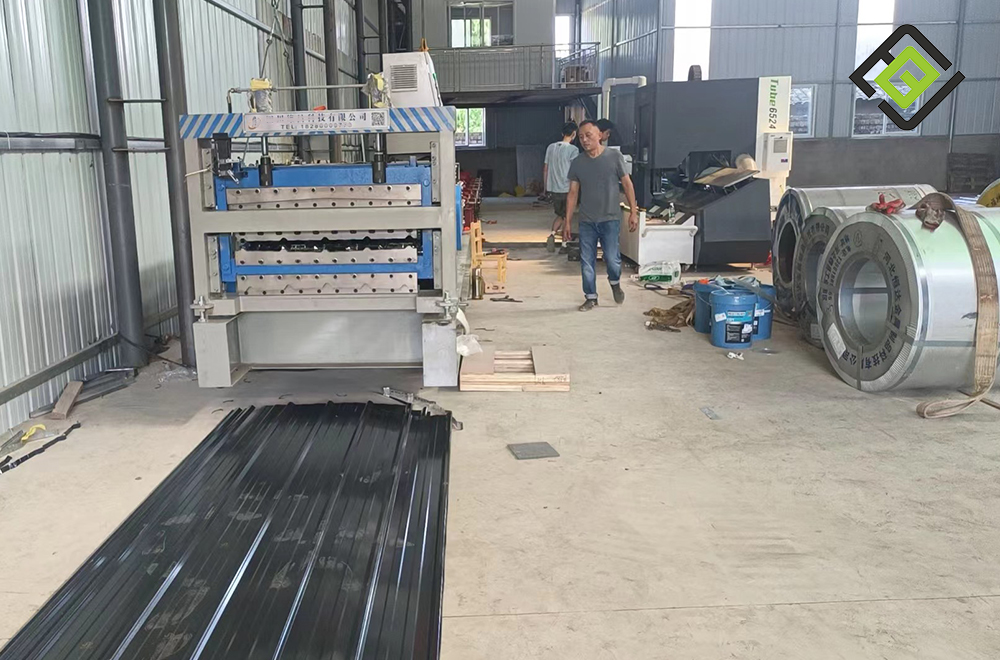
Steel sheet is bent into shape. Resin tile is built, layer by layer, from raw chemistry — and that difference shows up in every stage that follows.
2. The Raw Materials Come From Different Supply Chains Entirely
Steel roofing starts with a metal coil; resin tile starts with polymer resin. That single fact changes how each material is priced, sourced, and quality-checked.
Resin Tile Inputs
A resin tile is a two-layer co-extrusion: an ASA (acrylonitrile styrene acrylate) weather-resistant cap layer bonded to a PVC structural substrate, with stabilizers, impact modifiers such as CPE or ACR, and calcium carbonate filler blended in to build strength.
- ASA resin: roughly RMB 10,000–40,000+ per ton depending on grade and origin
- PVC substrate resin: a lower-cost commodity polymer, but formulation ratio is closely guarded by each manufacturer
- Finished tile market price (2.0–3.0mm): roughly RMB 30–55 per m², with recycled-content tiles priced well below that range and generally shorter-lived
Color Steel Sheet Inputs
Color steel starts as a galvanized or aluminum-zinc alloy (AZ) coil, 0.3–1.5mm thick, that already carries a factory-applied organic coating before it ever reaches the roll-forming line.
- PE (polyester) coating: roughly RMB 30–60 per m², typical service life 10–15 years
- PVDF (fluorocarbon) coating: roughly RMB 80–150 per m², typical service life 25–30 years
- Coated coil price fluctuates with steel-market benchmarks — commonly RMB 5,500–7,700 per ton depending on zinc-layer weight and coating grade
(Resin roofing materials)
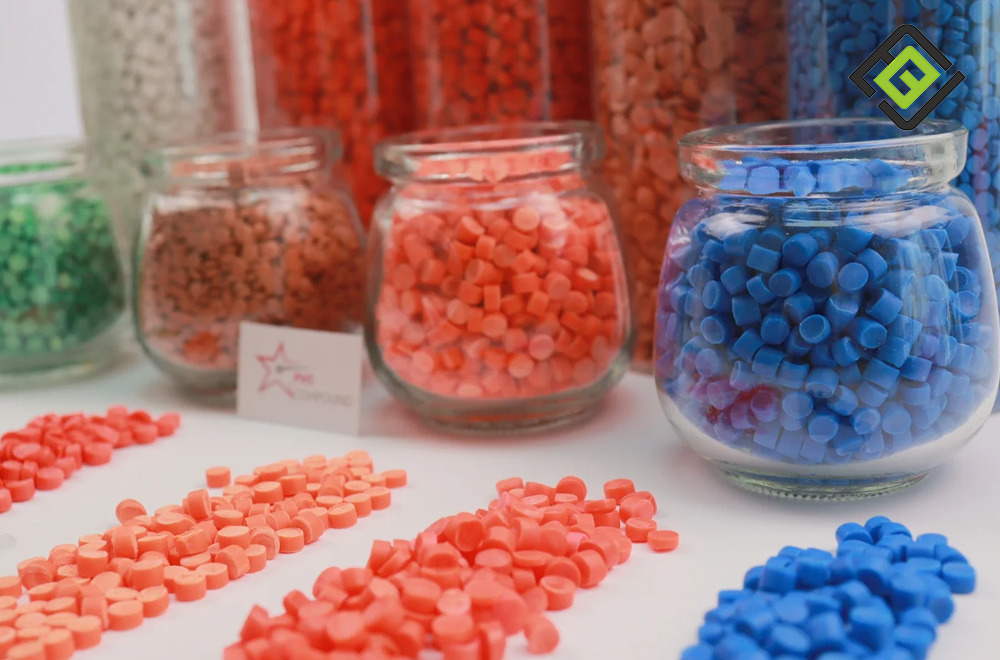
(Metal roofing materials)
The sourcing challenge is different too. Steel coil pricing tracks a transparent, commodity-driven market. ASA resin quality, by contrast, is much harder for a buyer to verify from the outside — cheap ASA and recycled PVC content can produce a tile that looks identical on day one and fades or cracks within two to three years.
3. The Manufacturing Process — and What It's Measured Against
Resin tile production is governed by melt-phase variables: barrel temperature across multiple zones, screw speed, the co-extrusion ratio between the ASA and PVC layers, and cooling rate through the calibration unit. Get any one of those wrong and the tile can warp, delaminate, or show an uneven surface layer. Color steel forming, by comparison, is a mechanical process — the coil is bent through a fixed sequence of rollers at line speed, and the main quality checks are coating adhesion, profile dimension, and edge straightness.
| Process Factor | Resin Tile | Color Steel Sheet |
|---|---|---|
| Forming method | Hot-melt co-extrusion, then calibration and embossing | Cold roll-forming of pre-coated coil |
| Key control points | Melt temperature, screw speed, layer ratio, cooling rate | Roller alignment, line speed, coating protection during bending |
| Primary QC focus | Layer bonding, surface gloss, wall thickness consistency | Coating adhesion, profile geometry, edge finish |
| Governing standards (China) | JG/T 346-2011 (synthetic resin decorative tile); SH/T 1846-2024 (ASA co-extrusion compound) | GB/T 12754-2019 (color-coated steel sheet/strip); GB/T 12755 (profiled steel sheet) |
4. A Few Other Differences Worth Knowing
These don't need a deep dive, but they're worth having on the radar when comparing the two materials:
- ✓ Fire performance is tested differently — resin tile needs a flame-retardant formulation to pass building codes, while steel is inherently non-combustible.
- ✓ Installation hardware differs — resin tile typically uses concealed clip or screw fastening on purlins, while steel sheets are lap-jointed and screw-fixed directly.
- ✓ Weight per square meter is notably different, which affects structural loading calculations for the roof frame.
- ✓ Sound insulation under rain tends to favor resin tile's thicker, denser profile over thin-gauge steel.
- ✓ Mold and tooling investment for new resin tile profiles is a separate, ongoing cost that steel roll-forming doesn't carry in the same way.
Why This Matters When You're Choosing a Supplier
Put the four differences together and a pattern emerges. Resin tile manufacturing asks for heavier equipment investment, a narrower and less transparent raw material supply chain, a more sensitive multi-variable process, and quality control that has to catch problems a visual inspection won't reveal — a slightly off ASA ratio doesn't show up until the tile has spent a season in the sun. None of that is true of color steel sheet in the same way; it's a mature, mechanically simple process built around a commodity input.
That's precisely why a genuinely capable resin tile producer is harder to find than the market volume suggests. Plenty of workshops own an extrusion line; far fewer run the formulation discipline, in-house material testing, and process control needed to turn out tiles that still look and perform the same way ten or twenty years after installation. For distributors, developers, and contractors evaluating quotes, the equipment and process gap described here is a reasonable place to start asking harder questions of any supplier claiming to make resin tile at color-steel prices.