
What Actually Makes an ASA Roof Sheet Different
What Actually Makes an ASA Roof Sheet Different
A spec sheet tells you what a product is supposed to do. It doesn't tell you how it holds up on a real roof, in real sun, over real years. Here's what actually separates a well-made ASA roof sheet from the rest — and what to check before you buy one.
Ask ten suppliers what makes their ASA roof sheet special, and you'll get ten versions of the same pitch. Fewer of them can tell you why. The real answer isn't one feature. It's a handful of engineering choices that only show up years after installation — not on day one.
At JBE, we build our ASA/PVC roofing range around this exact idea. So before you compare us to anyone else, here's the honest breakdown of what actually matters in an ASA sheet — and where the differences come from.
It Starts With the Structure, Not the Surface
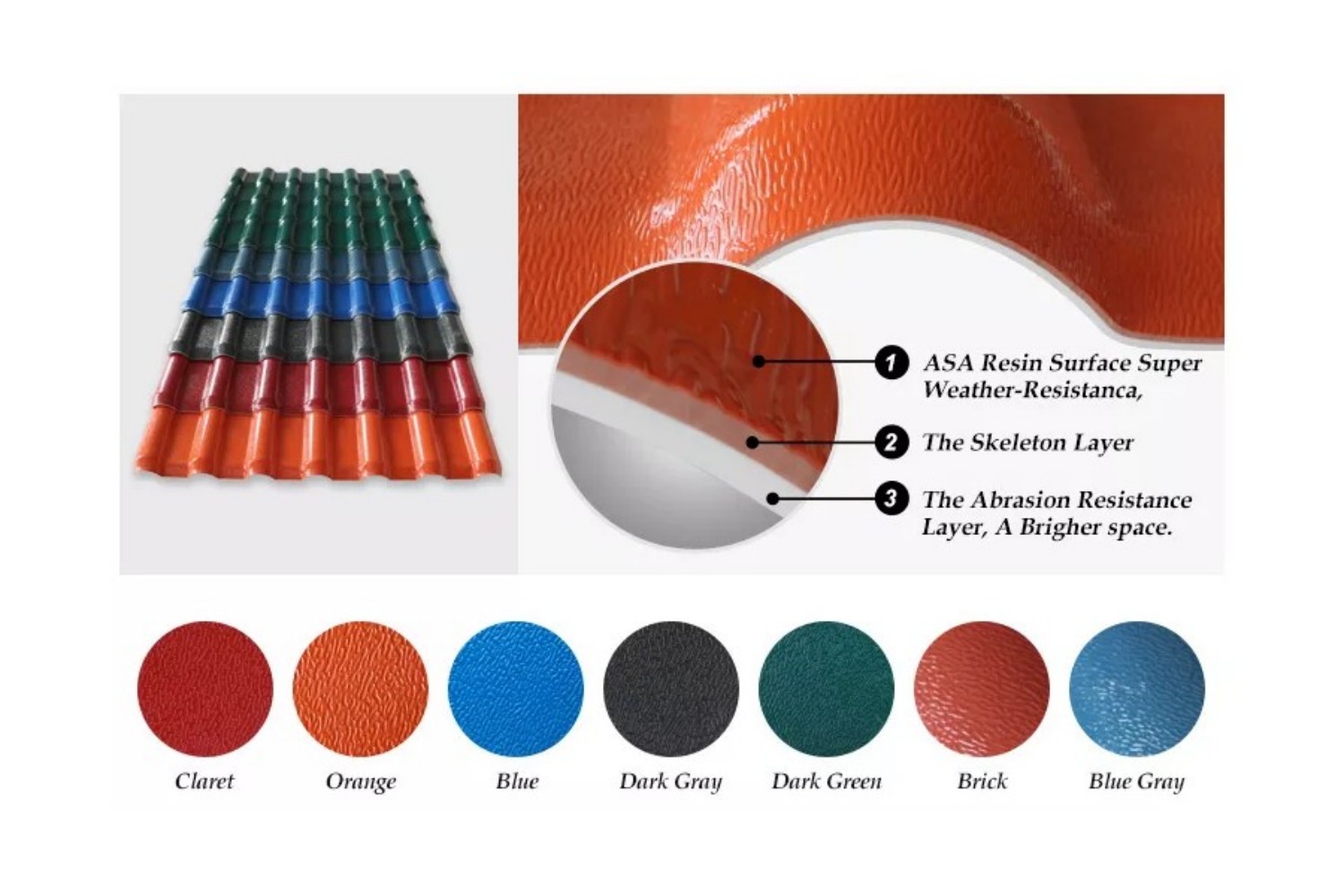
Every good ASA sheet is built from three layers, co-extruded together in one pass. The top layer is ASA resin — Acrylonitrile Styrene Acrylate. That's your UV shield. Under it sits a PVC core. That's your strength and rigidity. Some panels add a third inner layer for insulation or noise dampening.
A single-layer PVC sheet can handle rain and general wear just fine. What it can't do is stand up to sun the way ASA can. UV is where plain PVC starts to crack first — usually well before the roof's structural life is up.
Think of the ASA layer the way you'd think about sunscreen. The number on the bottle matters. But so does how evenly it's spread, and whether it's still doing its job three summers later. A sheet with a consistent ASA cap — batch after batch — holds its UV protection. One with a thin or patchy cap doesn't, no matter what the catalog says.

UV Resistance
ASA resin absorbs and disperses UV instead of just blocking it. That's what stops the chalking, fading, and brittleness plain PVC develops over time.
Color Retention
A well-made ASA surface keeps its color for years, not months. In hot, high-UV markets, this is often the difference buyers notice first.
Cap Layer Thickness
Typically 0.1–0.3mm ASA over a 1.5–3mm total sheet. Get this number from your supplier — it matters more than the brand name on the box.
Under the right conditions, a properly specified ASA sheet can run 20 to 30 years before UV starts to show. That range isn't fixed, though. It moves with sun intensity, install quality, and — again — how consistent that ASA layer actually is from batch to batch.
So if long-term color and UV stability is what you're buying for, don't start with the warranty number. Start by asking the supplier how they measure and control ASA thickness during production. The warranty is a promise. The measurement is the proof.
Where ASA Beats Metal and Clay
Compare an ASA sheet to painted steel, and the advantage isn't subtle. ASA and PVC don't rust. They don't corrode in salt air. They don't break down under acid rain the way galvanized metal eventually does at the joints and fastener points. That's a real, measurable difference in coastal towns, humid regions, and factory zones with heavy air pollution.
Rain noise is another point people forget until they live with it. Rain on a plastic roof is noticeably quieter than rain on metal. No extra acoustic layer needed — it's just how the material behaves.
Against clay tile, the story is weight. ASA and PVC sheets typically run 25–40% lighter than clay of the same coverage. Less weight means lighter purlins, simpler framing, and lower structural cost — especially useful on retrofit jobs where the old frame was never built for heavy tile in the first place. Our Spanish-style resin tile line was built exactly for this: the clay look, without the clay load.
No Corrosion
No rust, no salt-air breakdown, no acid rain damage. Coastal and industrial sites hold up without repainting cycles.
Lighter Than Clay
25–40% lighter than clay tile of the same coverage. Lower dead load, simpler framing, easier retrofits.
Impact & Stability
The ASA cap absorbs local impact instead of cracking. Sheets also hold their shape better through daily heat-cool cycles.
What to Ask Before You Buy
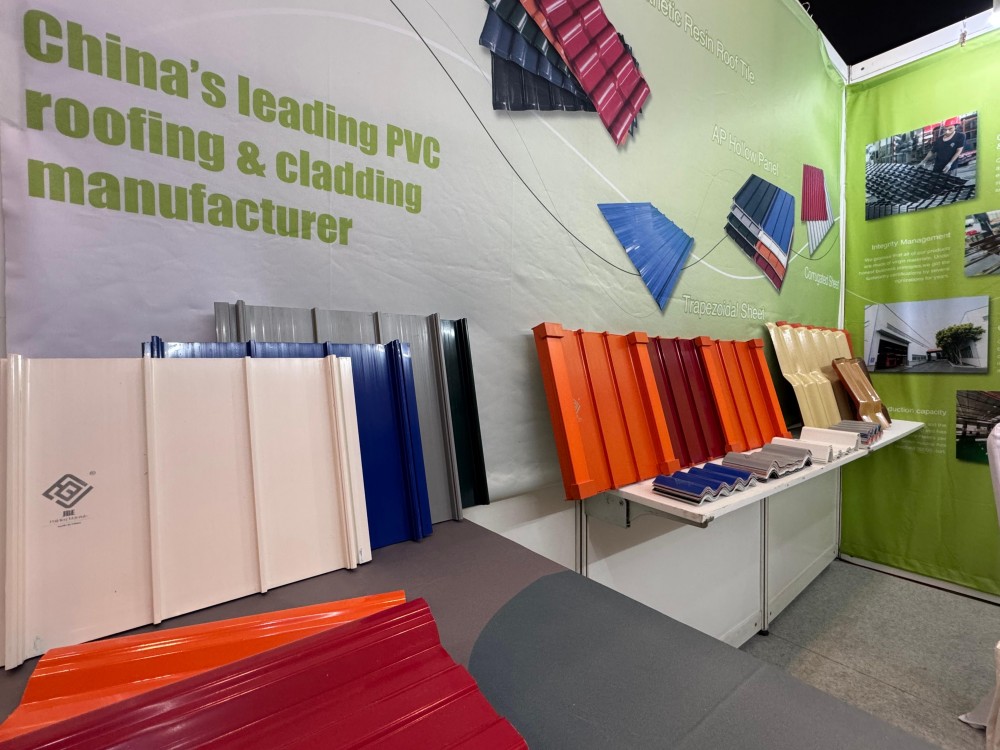
None of these advantages come free with the product category name. They come from how the sheet is actually made — and that's where quality varies most between suppliers.
- ✓ Ask for the exact ASA cap thickness — and how it's measured during production, not just on paper.
- ✓ Confirm the resin source. Consistent UV stabilizer formulation from a qualified supplier means consistent color and performance batch to batch.
- ✓ Request third-party test reports for UV resistance, impact resistance, and fire rating — not just catalog claims.
- ✓ Don't stop at a sample. A good sample doesn't guarantee bulk-batch consistency. Ask for a material report tied to the actual production run.
| Spec | Typical Range / Behavior | Why It Matters |
|---|---|---|
| ASA cap thickness | 0.1 – 0.3 mm | Directly controls UV lifespan and color hold |
| Total sheet thickness | 1.5 – 3 mm | Affects rigidity and load capacity |
| Expected UV lifespan | 20 – 30 years (site-dependent) | Sets realistic replacement planning |
| Weight vs. clay tile | 25 – 40% lighter | Lowers structural and framing cost |
| Corrosion behavior | None — no rust, no salt damage | Removes repainting and joint failure risk |