
Why Metal Fails in Corrosive Environments
Material Science & Corrosion Resistance
Ammonia in a hog barn and salt mist on a coastal processing plant have almost nothing in common — except that both will eat through a metal roof at speeds most facility managers underestimate. Here's why synthetic resin panels don't share that weakness, and what that means for total cost of ownership.
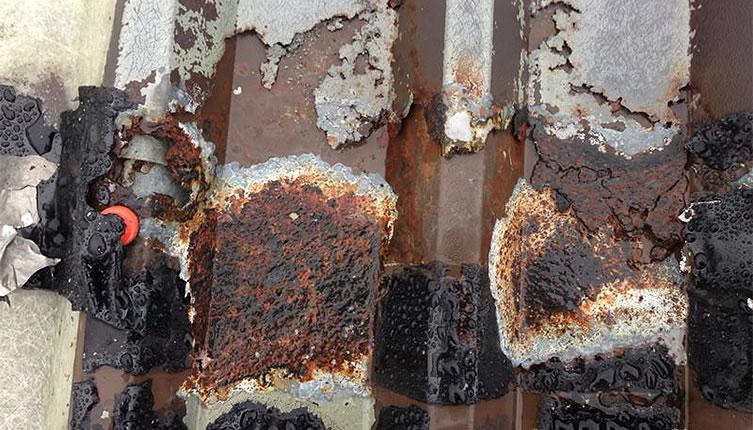
Corrosion is often talked about as a single problem, but it's really two different chemical attacks wearing the same name. In agricultural buildings — barns, poultry houses, dairy parlors, feed processing rooms — the enemy is airborne. Ammonia off-gassing from manure and bedding, combined with humidity and the hydrogen sulfide that forms in enclosed livestock spaces, creates an atmosphere that strips protective zinc coatings off galvanized steel far faster than the metal's rated service life suggests.
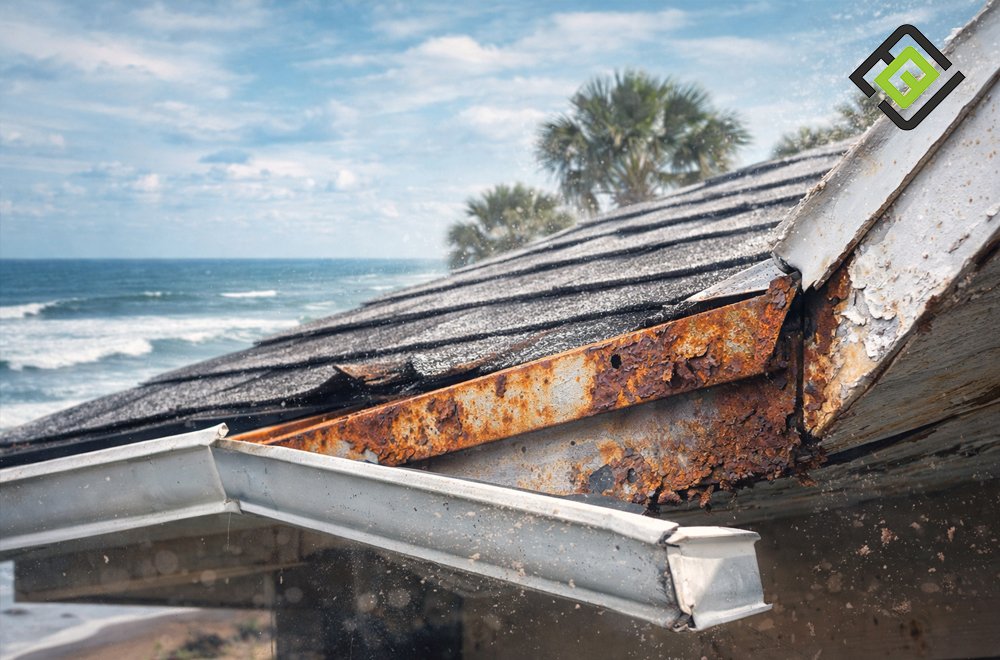
In heavy industry — mining operations, chemical processing lines, coastal manufacturing — the mechanism is different but the outcome is the same. Airborne dust and ash settle on roofing and wall panels, and once that particulate layer mixes with rain, condensation, or salt-laden coastal mist, it forms a mildly acidic film that sits against the metal surface around the clock. Unlike a single splash of chemical exposure, this is sustained contact, and sustained contact is what breaks down even coated or stainless finishes over a few operating seasons.
Metal's vulnerability isn't a manufacturing defect — it's chemistry. Zinc, aluminum, and even most stainless alloys rely on a surface layer that can be dissolved or destabilized by the right combination of moisture and reactive gas. Once that layer is compromised, corrosion doesn't stay cosmetic. It spreads under fasteners, along seams, and into structural fixings, which is why so many "roof leaks" in these environments turn out to be corrosion failures rather than installation faults.
Agricultural Exposure
Ammonia, hydrogen sulfide, and high ambient humidity attack zinc coatings within a few operating seasons in enclosed livestock housing.
Industrial Exposure
Dust, ash, and saline mist form a persistent acidic film on roofing surfaces near mining, processing, and coastal industrial sites.
Hidden Cost Curve
Coating failure often precedes visible leaks by months, meaning replacement budgets get triggered later — and more expensively — than planned.
A Different Approach
JBE's ASA/PVC composite panels have no metallic layer to sacrifice — corrosion resistance is built into the polymer itself, not a coating on top of it.
A roofing material can't corrode from a reaction it has no chemical pathway to undergo — that's the practical difference between coated metal and an engineered polymer sheet.
This is the core advantage of JBE's resin roofing systems in chemically aggressive settings. Our ASA-PVC and UPVC co-extruded sheets are built from synthetic resins that are chemically inert to ammonia, hydrogen sulfide, mild acids, and saline exposure — there's no zinc layer, no galvanic coating, and no metallic substrate underneath that can be exposed once a surface film wears through. The corrosion resistance isn't a coating applied to the product; it's a property of the material itself, which means it doesn't diminish with scratches, fastener punctures, or years of weathering.
That has direct, practical implications for the two environments described above. In livestock and poultry buildings, JBE panels hold up under continuous ammonia exposure without the pitting or rust-through that shortens the service life of galvanized roofing, and their smooth, non-porous surface resists the bacterial buildup that porous or corroding metal surfaces tend to trap — a meaningful hygiene advantage in dairy and hen house applications. In mining, chemical processing, and coastal industrial facilities, the same inertness means dust, ash, and saline mist accumulate on the surface without initiating the electrochemical reactions that eat through metal liner panels, cladding, and roof sheeting.
- ✓ No zinc, galvanic, or sacrificial coating to wear through over time
- ✓ Chemically inert to ammonia, hydrogen sulfide, mild acids, and saline mist
- ✓ Smooth, non-porous surface resists bacterial and mold buildup for easier washdown
- ✓ UV-stable ASA cap layer prevents brittleness and color fade from prolonged sun exposure
- ✓ Virtually maintenance-free across a multi-decade service life, even in harsh atmospheres
| Exposure Factor | Galvanized / Coated Metal | JBE Resin Roofing |
|---|---|---|
| Ammonia / H₂S exposure | Coating degradation within a few seasons | No reactive surface to degrade |
| Saline mist / coastal air | Accelerated pitting and rust-through | Chemically inert to salt exposure |
| Dust / ash accumulation | Traps moisture against metal surface | Non-porous surface, easy washdown |
| Hygiene / bacterial buildup | Corrosion pits harbor bacteria | Smooth surface, low bacterial adhesion |
| Typical maintenance need | Recoating, patching, early replacement | Minimal — rinse and inspect |
JBE resin roofing systems are manufactured and tested against GB/T 25970-2010 and JG/T 346-2011 standards, with weathering performance verified through xenon arc testing per ISO 4892-2.