
Why PVC Roofing Sheets Are Recommended for Chemical Plants
A practical look at what actually happens to a roof above a chemical plant — and why more plant engineers are moving away from steel and toward PVC/UPVC sheeting.
If you've ever walked a production site a few years after it was built, you already know the pattern. The walls look fine. The floors are fine. But the roof — especially near vents, scrubbers, or storage tanks — tells a different story. Streaks of rust, flaking paint, panels that have gone soft and wavy in the heat. It's almost never a design flaw. It's just the wrong material sitting under the wrong conditions for too long.
Chemical plants are one of the harshest environments a roof can be asked to survive. Acid mist, alkaline vapor, saline air near coastal sites, condensation that never fully evaporates because of exhaust cycles — none of that is friendly to galvanized steel, and even coated steel eventually loses that fight once the coating gets scratched or worn thin. That's really the starting point for why PVC (and its rigid form, UPVC) keeps coming up in conversations about re-roofing or new-build specs for this kind of facility.
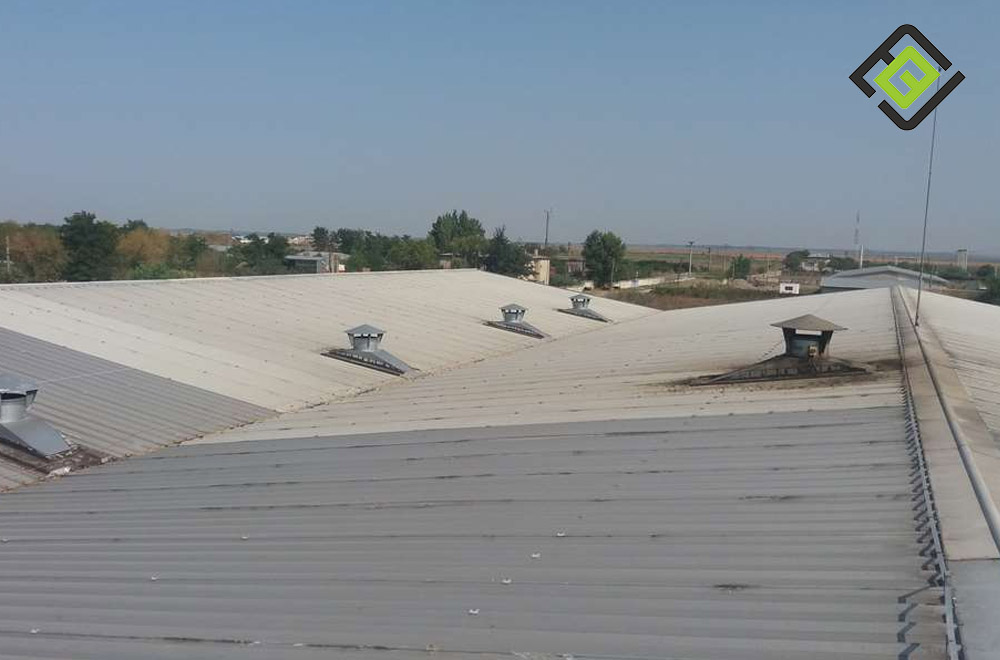
It simply doesn't corrode the way metal does
This is the part everyone leads with, and for good reason. PVC is a polymer, not a metal, so the whole rust mechanism that destroys steel roofing — oxidation triggered by moisture and airborne salts or acids — doesn't apply to it in the same way. Acid fumes, alkaline residue, chloride particles near the coast: PVC sheeting sits through all of it without pitting, flaking, or thinning out. On a working plant, that's the difference between a roof you inspect once a year and one you're patching every few months.
Worth noting: corrosion resistance isn't just about the surface layer. Well-made UPVC sheets are engineered through the panel — core, middle, and weathering layer each doing a job — so scratches or minor surface wear don't suddenly expose a vulnerable substrate underneath, the way a scratched metal coating does.
The weight difference changes more than you'd expect
PVC roofing runs noticeably lighter than steel or fiber cement — often somewhere in the range of half the weight or less, panel for panel. On paper that sounds like a footnote. On site, it changes the structural load calculations, it means fewer people and less equipment needed to get panels up, and it takes real pressure off older steel frameworks that weren't necessarily designed with heavy retrofits in mind. For plants doing phased renovations without shutting down production, that lighter install process also tends to mean less disruption underneath.
Thermal behavior matters more than people assume
Metal roofing transfers heat fast — anyone who's stood under an uninsulated steel roof at 2pm in July knows this. PVC has much lower thermal conductivity, so interior temperatures stay more stable and the roof itself doesn't become a secondary heat source radiating down onto equipment and workers. In process areas where temperature swings can actually affect product quality or instrumentation accuracy, that stability is not a minor comfort feature — it's operationally relevant.
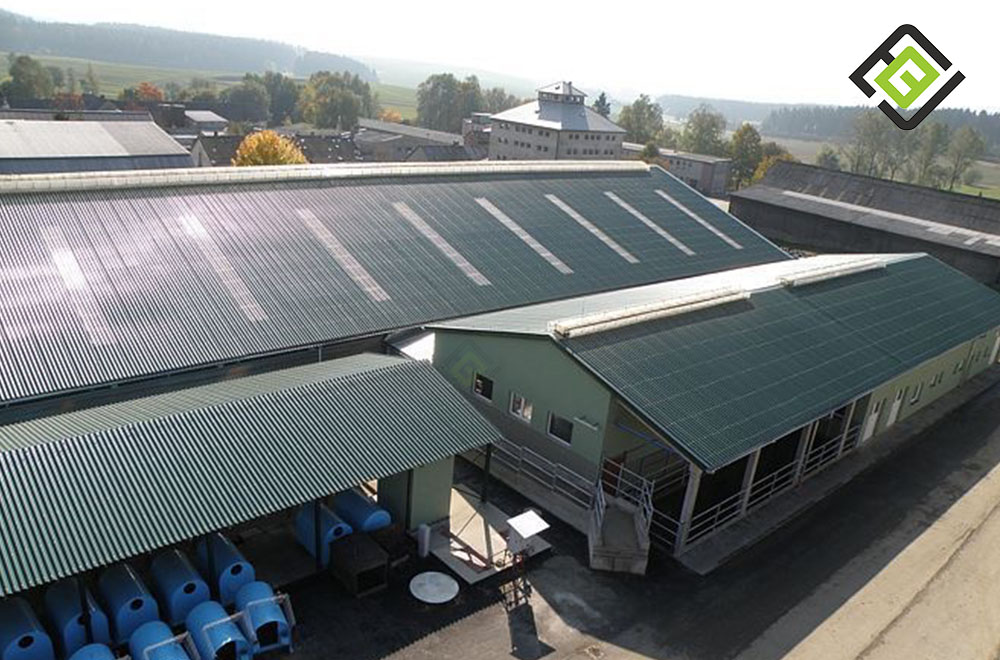
Fewer shutdowns for maintenance
This is the one that shows up in the budget spreadsheet rather than the technical spec sheet. A steel roof over a corrosive process area typically needs recoating, patch repairs, or partial replacement on a fairly aggressive schedule once corrosion starts. Each of those jobs usually means scaffolding, downtime near the work zone, and sometimes a partial production pause. PVC roofing doesn't eliminate maintenance entirely, but it stretches the interval out considerably, which quietly adds up over a 10–15 year ownership horizon even though the upfront material cost is sometimes a bit higher than basic galvanized sheet.
Where PVC/UPVC roofing actually gets specified
| Facility type | Main stress factor | Why PVC holds up |
|---|---|---|
| Chemical processing plants | Acidic / alkaline vapor | Chemically inert surface, no oxidation |
| Wastewater / sewage treatment | Constant humidity, H₂S exposure | Non-porous, resists microbial and chemical attack |
| Hot-dip galvanizing plants | Zinc fumes, high heat near lines | Low thermal conductivity, chemical stability |
| Coastal warehousing | Salt spray, high UV | No rust, UV-stabilized surface layer |
A quick note from the material side
We spend most of our days at JBE (Sichuan Jinbei'er Building Materials Co., Ltd.) thinking about exactly this kind of problem — which is a little unusual for a roofing manufacturer, since a lot of the industry is still focused mainly on looks and price. Our work is centered on ASA, PVC, and UPVC composite roofing systems, built in layered structures specifically so the chemical-resistant properties don't just live on the surface. It's the same composite approach behind our Spanish-style roof tile line, just tuned differently — architectural profiles for aesthetics on one end, industrial-grade panels built for acid, alkali, and salt exposure on the other.
If you're currently speccing a roof for a plant with heavy chemical exposure, or re-evaluating one that's already showing early corrosion, it's usually worth getting panel samples and technical data in hand before the decision gets made — the difference between roofing grades isn't always obvious from a spec sheet alone.
Talk to JBE about roofing for corrosive environments
We can walk through panel structure, chemical resistance data, and project references for facilities similar to yours.
Email info@jberoof.com— Notes from the JBE technical team, on roofing materials for industrial and corrosive environments.